
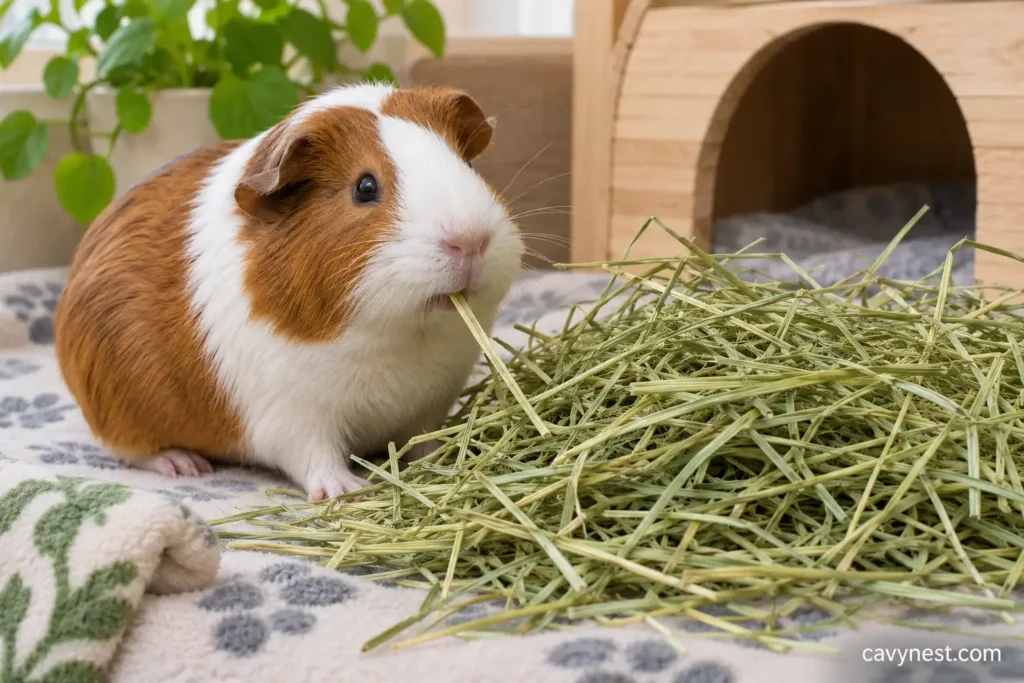
Timothy hay is an excellent everyday grass hay for most healthy adult guinea pigs. Keep a generous, clean supply available around the clock rather than measuring a small daily serving. Its long fibers support normal gut movement and the repeated chewing helps wear constantly growing teeth. Hay does not replace vegetables, species-specific pellets, water or dietary vitamin C.
Quick answer
Most healthy adult guinea pigs should have unlimited access to fresh, good-quality timothy hay, day and night. Replace soiled or damp hay, refill whenever supplies run low, and place hay at several easy-to-reach feeding spots. Hay provides the fiber and chewing time guinea pigs need, but vitamin-C-rich vegetables and appropriate pellets remain important.
Quick picks
- For healthy adults: timothy or another good-quality grass hay, always available.
- For reluctant hay eaters: offer fresh, fragrant hay in several locations and change types gradually.
- For growing, pregnant or nursing guinea pigs: ask an experienced veterinarian about extra calcium and whether alfalfa is appropriate.
Why timothy hay matters
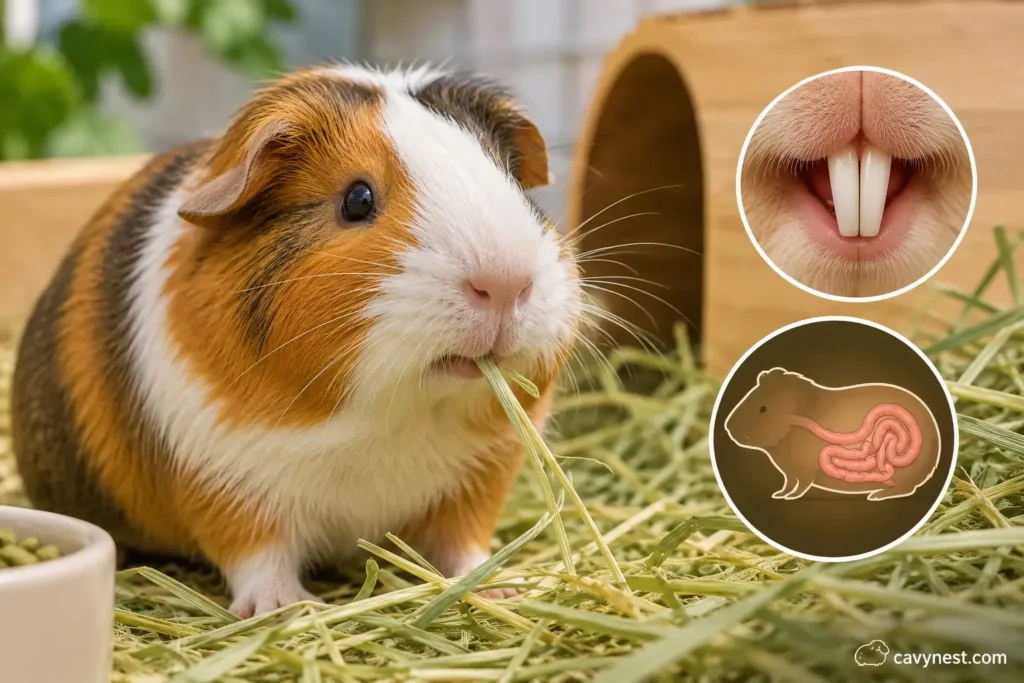
Guinea pigs are grazing herbivores. Their digestive system depends on a steady stream of roughage, not large isolated meals. The veterinary guidance from PDSA and Merck recommends free access to quality grass hay.
Long-stem hay encourages sustained side-to-side chewing, which helps provide normal tooth wear. Because dental disease can still develop despite good husbandry, hay is preventive care rather than a guarantee.
Timothy is a grass hay, not a medicine or a complete diet. Orchard grass and other suitable grass hays can also be valuable when they are clean and accepted. PDSA guinea pig diet guidance.
How much timothy hay should you feed?
The practical answer is unlimited. Never restrict hay to a fixed handful, a single rack refill or a precise number of grams. Refill before it is depleted, including overnight.
Different organizations use approximate diet proportions of about three quarters to nine tenths grass hay or grass. These estimates express that hay dominates the diet; they are not a reason to weigh out a maximum portion.
Offer an amount visibly larger than one guinea pig can eat at a sitting. For a pair, distribute hay across separate spots so neither companion can block access. Remove wet or fouled leftovers and replace them with fresh hay.
Timothy hay compared with other hays
| Hay | Typical use | Important caveat |
|---|---|---|
| Timothy grass hay | Everyday main hay for healthy adults | Choose clean, palatable bales |
| Orchard grass hay | Suitable adult alternative | Texture and acceptance differ |
| Alfalfa legume hay | Special growth, pregnancy or lactation needs | Not the routine sole hay for healthy adults |
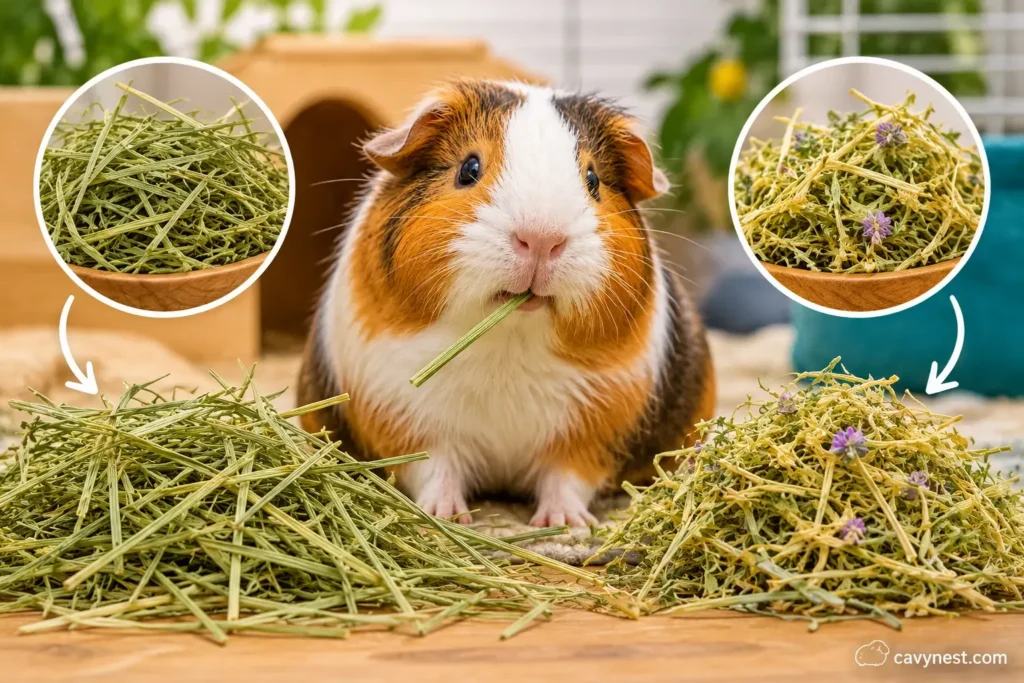
Timothy and orchard grass are both suitable grass hays for most healthy adults. Individual guinea pigs may prefer different stem textures or cutting styles; the best choice is the clean grass hay they eat consistently.
Alfalfa is a legume hay with more calcium and protein, so it is generally not the routine main hay for healthy adult guinea pigs. Young, pregnant or nursing animals may need different nutritional support under veterinary guidance. University of Florida guinea pig care.
Choose based on life stage, the overall ration, any urinary problems and the animal’s appetite. There is no single “first cut” or “second cut” that is automatically right for every guinea pig.
How to choose safe, appealing hay
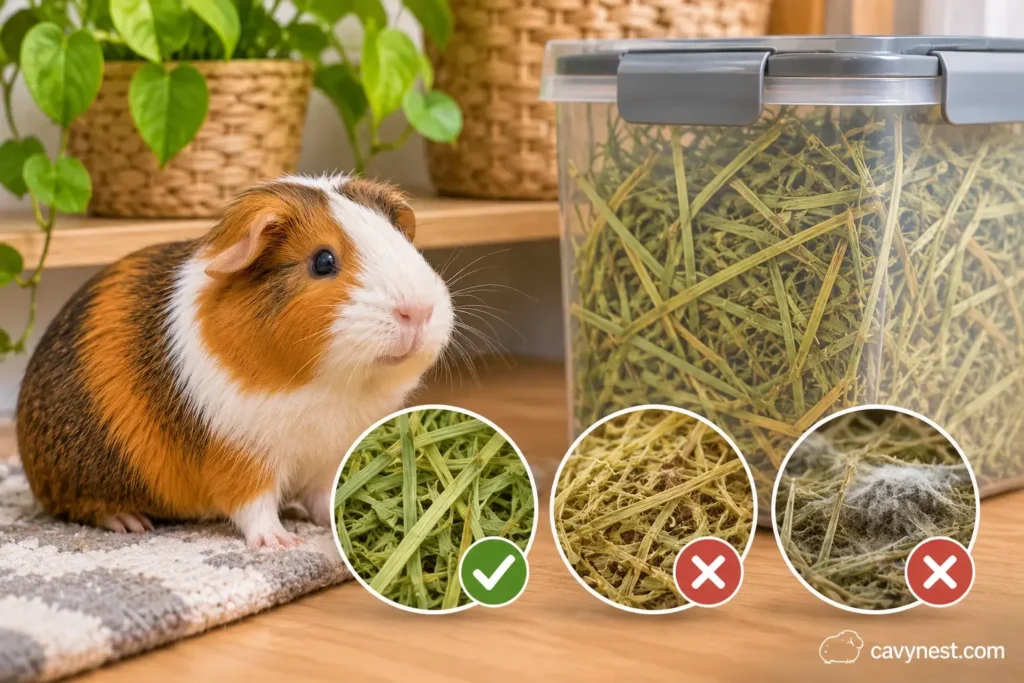
Look for dry hay that smells fresh and grassy, with a mix of usable stems and leaves. Color alone is not a safety test, although very brown, stale material is less attractive. Inspect new packages before placing them in the enclosure.
Discard hay that is damp, moldy, musty, visibly contaminated or unusually dusty. Do not simply shake moldy hay outdoors and then feed it. Keep bales away from pests and household chemicals.
Store hay in a cool, dry, ventilated spot, protected from rain and condensation. Avoid sealing hay that still contains moisture into an airtight container; trapped moisture increases the risk of spoilage.
Set up a better hay-feeding routine
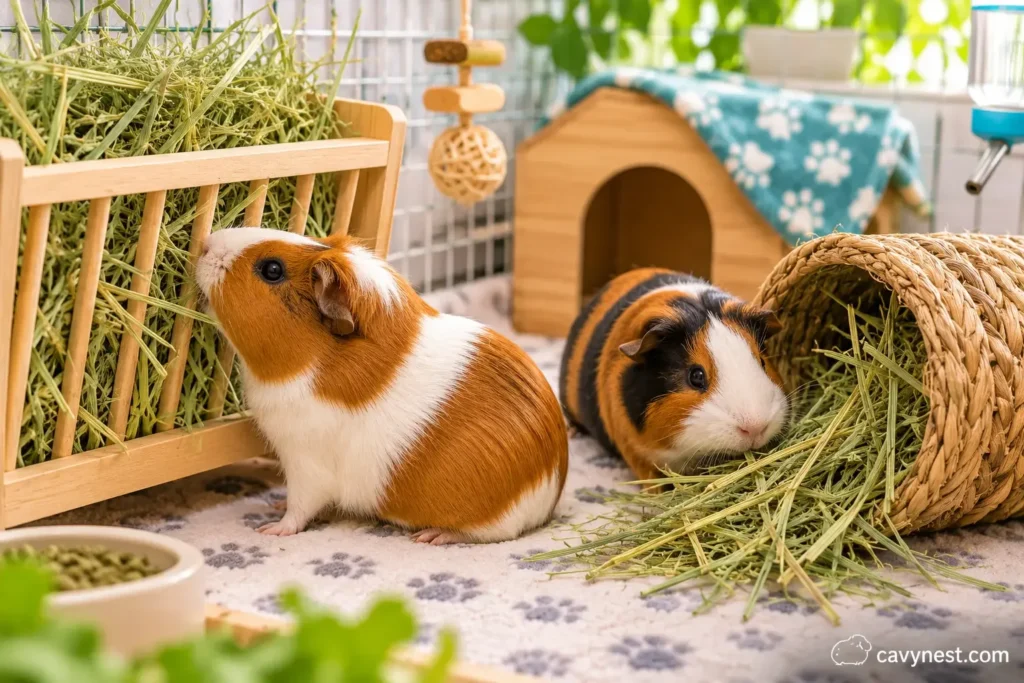
Put loose hay in spacious, accessible areas or a safe feeder that cannot trap heads or feet. Place multiple piles near shelters and preferred resting spots, without blocking walking routes.
Check the hay in the morning and evening, and top it up whenever needed. A guinea pig should not need to wait until the next scheduled feeding to obtain fiber.
Use the litter area thoughtfully: many guinea pigs defecate while eating. Replace contaminated hay instead of returning it to the feeding stock. Rotate safe grass-hay varieties gradually when it helps maintain interest.
What else belongs in the bowl?
Hay is the foundation, but it does not provide a reliable complete vitamin C supply. Guinea pigs cannot make their own vitamin C; provide suitable vitamin-C-rich vegetables, an appropriate guinea-pig pellet and continuous drinking water. Merck Veterinary Manual diet guidance.
PDSA suggests roughly one cup of mixed fresh vegetables per guinea pig daily; pellet serving guidance varies across veterinary sources and product formulations. Follow your veterinarian’s advice and the food label for the specific animal rather than copying a universal scoop size.
Plain, fortified guinea-pig pellets are preferable to colorful muesli mixtures, which allow selective feeding. Do not use rabbit pellets as a substitute for a guinea-pig diet.
Common mistakes to avoid
Do not treat hay as bedding alone or provide it only as an occasional snack. A guinea pig can have a full pellet bowl and still lack the long-fiber chewing needed for healthy routine feeding.
Avoid lawnmower clippings; they spoil rapidly and may cause illness. Do not make sudden wholesale changes to hay or other foods. Mix a new suitable hay with the familiar one and watch appetite and droppings. RSPCA guinea pig diet advice.
Never assume a hay label proves the contents are safe. Check smell, moisture and dust each time you open a new bag, particularly after long storage.
When poor appetite becomes urgent
A guinea pig that eats less, produces fewer droppings, loses weight, drools, appears painful or has trouble chewing needs prompt veterinary assessment. Refusal to eat or a marked reduction in droppings can become an emergency.
Do not wait several days for a preferred hay brand to arrive, and do not try to fix a serious appetite change by swapping hay repeatedly. An experienced guinea pig veterinarian can assess the teeth, digestion and hydration.
If you need to locate a suitable clinician, consult the guinea-pig veterinary finder listed on CavyNest; its availability and individual practices should be confirmed directly. guide to finding a guinea-pig veterinarian.
Final verdict
For most healthy adults, timothy hay is a dependable staple because it is a grass hay that supports sustained grazing and chewing. The correct daily amount is not a rationed scoop: it is continuous, clean access.
A varied, vitamin-C-adequate diet, safe enclosure, regular weight checks and veterinary care remain necessary. If your guinea pig avoids hay, address the cause rather than accepting it as a harmless preference.
Frequently asked questions
Can guinea pigs eat timothy hay every day?
Yes. Most healthy adult guinea pigs should have quality timothy hay available continuously every day.
How much timothy hay does one guinea pig need?
Offer an unlimited supply, replenishing it whenever it runs low; do not set a daily gram limit.
Is timothy hay better than orchard grass?
Not universally. Both are suitable grass hays for healthy adult guinea pigs when clean and readily eaten.
Can baby guinea pigs eat timothy hay?
Yes, but growing guinea pigs may also need a different calcium and protein balance; consult a guinea-pig veterinarian.
Should pregnant guinea pigs eat alfalfa?
Alfalfa may be appropriate for pregnant or nursing guinea pigs because of their increased needs; confirm the feeding plan with a veterinarian.
Does timothy hay contain enough vitamin C?
No. Timothy hay is not a reliable sole vitamin C source; guinea pigs require suitable vegetables and/or appropriate fortified foods.
Is dusty hay safe for guinea pigs?
Avoid unusually dusty, musty or moldy hay and replace it with clean, dry hay.
Can I feed hay only at mealtimes?
No. Guinea pigs should have access to hay throughout the day and night.
What if my guinea pig suddenly stops eating hay?
A sudden decrease in hay intake warrants prompt veterinary advice, especially if appetite or droppings also decline.
Can timothy hay replace pellets and vegetables?
No. Hay is the main fibrous food, but the overall diet must also supply vitamin C and other nutrients.