
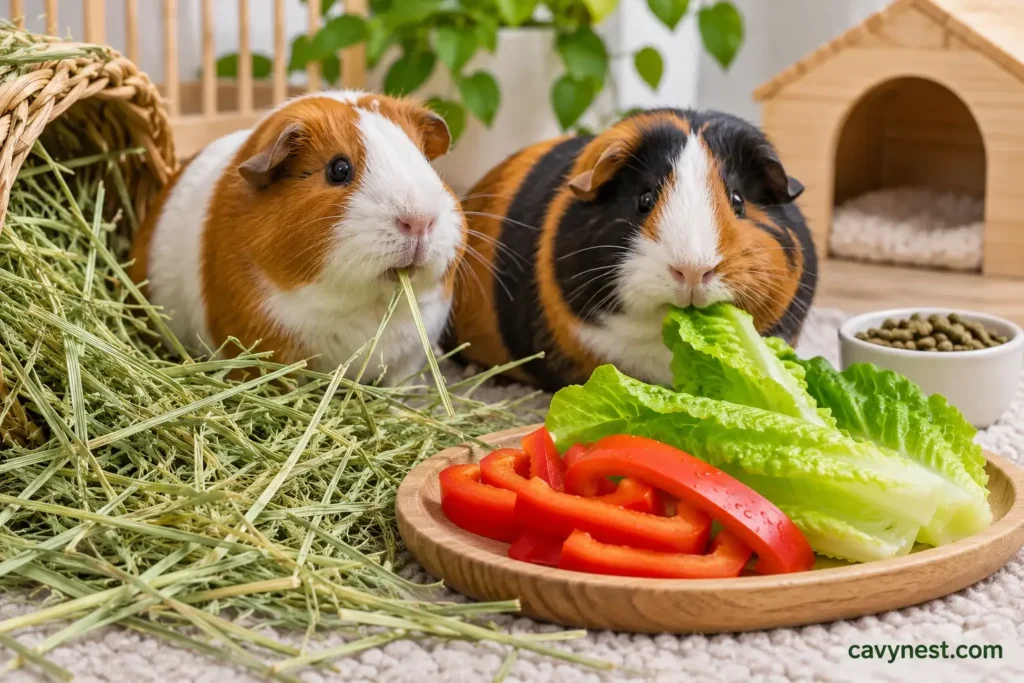
Guinea pigs can eat unlimited grass hay, daily varied vegetables such as bell pepper and romaine lettuce, and a measured portion of guinea-pig pellets fortified with vitamin C. Small pieces of fruit are occasional treats. Avoid onion, garlic, potato, avocado, chocolate, seeds, nuts and human snack foods. Fresh water is essential.
Everyday foundation: unlimited timothy or orchard grass hay. Daily produce: washed leafy greens and vitamin C-rich bell pepper.
The daily diet: what matters more than any food list
Unlimited hay is not optional
Guinea pigs are herbivorous grazers. Their gastrointestinal tract depends on frequent fiber intake, while long chewing sessions help maintain continuously growing teeth. A list of approved vegetables cannot compensate for a shortage of hay. Provide clean grass hay at all times, refill it rather than rationing it, and place it where a timid animal can reach it without competing for food.
For most healthy adults, timothy or orchard grass hay is the standard choice. Alfalfa is richer in calcium and protein and is generally reserved for growing, pregnant or nursing guinea pigs under veterinary guidance. Do not replace long-strand hay with compressed treats, pellet mixes or fresh salad. Wet, dusty or moldy hay must be discarded.
Pellets supplement rather than replace hay
Plain, high-fiber pellets formulated specifically for guinea pigs provide concentrated nutrients and often stabilized vitamin C. Feed a measured quantity according to the label, age, body condition and veterinary advice; veterinary sources describe roughly one to two tablespoons per adult daily as a common starting point. Rabbit feed is not an equivalent substitute because it may not supply sufficient vitamin C.
Safe vegetables and greens for guinea pigs
Choose several vegetables instead of one favorite
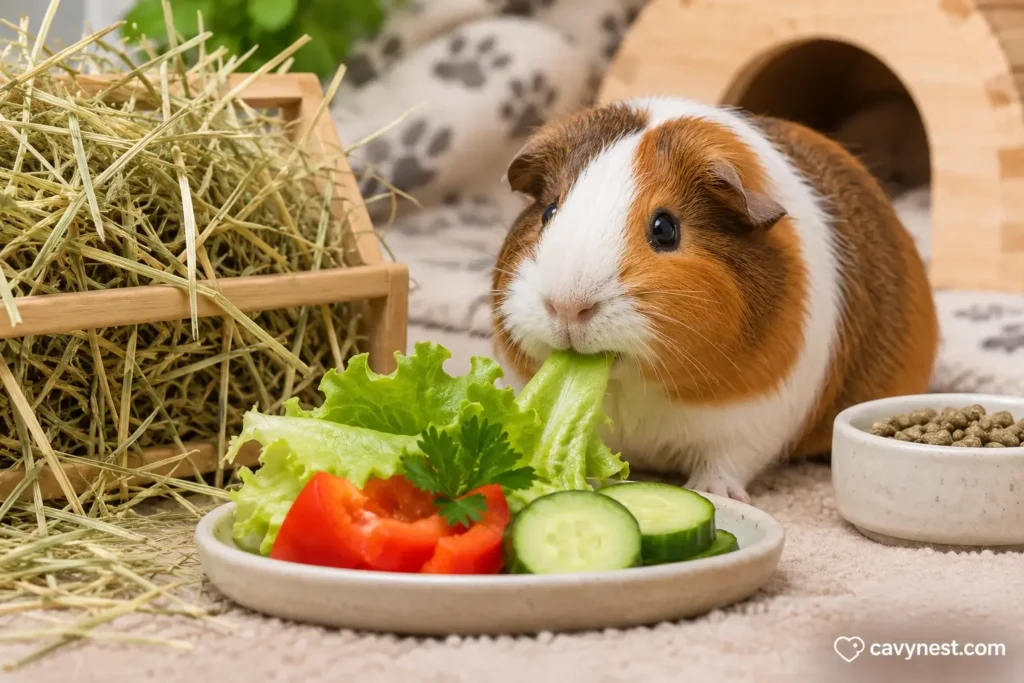
Bell pepper is a particularly practical fresh choice because it supplies vitamin C without the sugar load of fruit. Romaine, green and red leaf lettuce, endive, cilantro, cucumber and zucchini are other commonly accepted options. Choose multiple greens across the week. Rinse them, offer manageable pieces, and check for spoiled leftovers.
Fresh vegetables should complement hay rather than displace it. Recommended volumes vary somewhat among veterinary and welfare organizations, so do not treat a single cup measurement as universal. Appetite, droppings, weight, age and medical history matter more than an arbitrary number. If a guinea pig avoids hay and waits for salad, reduce the temptation to overfeed favorites and seek advice if this behavior persists.
Foods that need smaller portions or less frequent feeding
Why fruit is a treat, not a daily staple
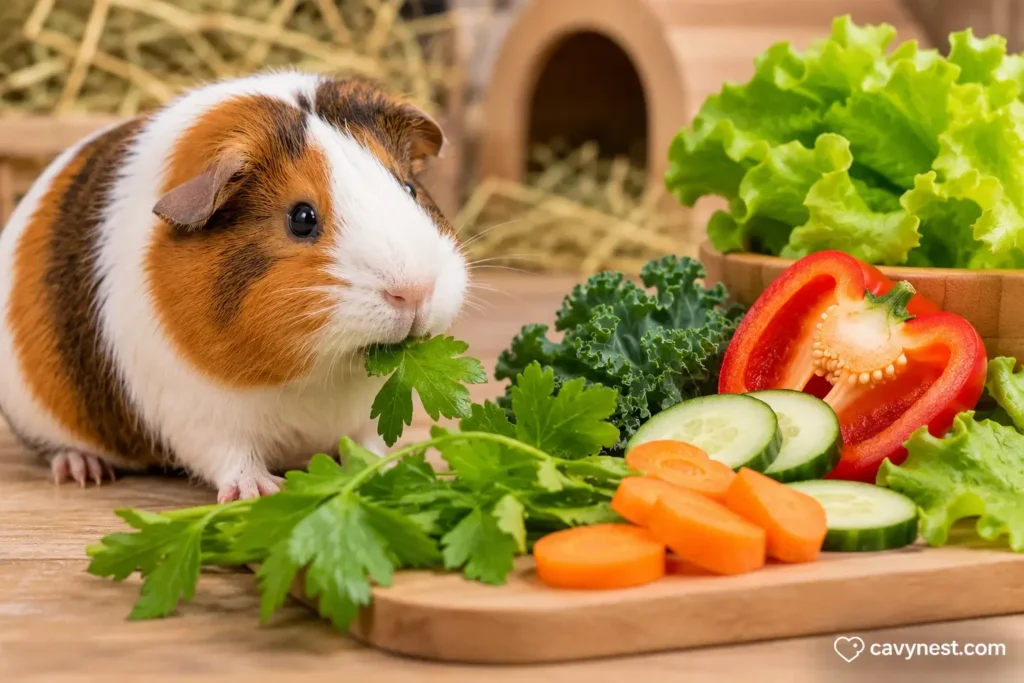
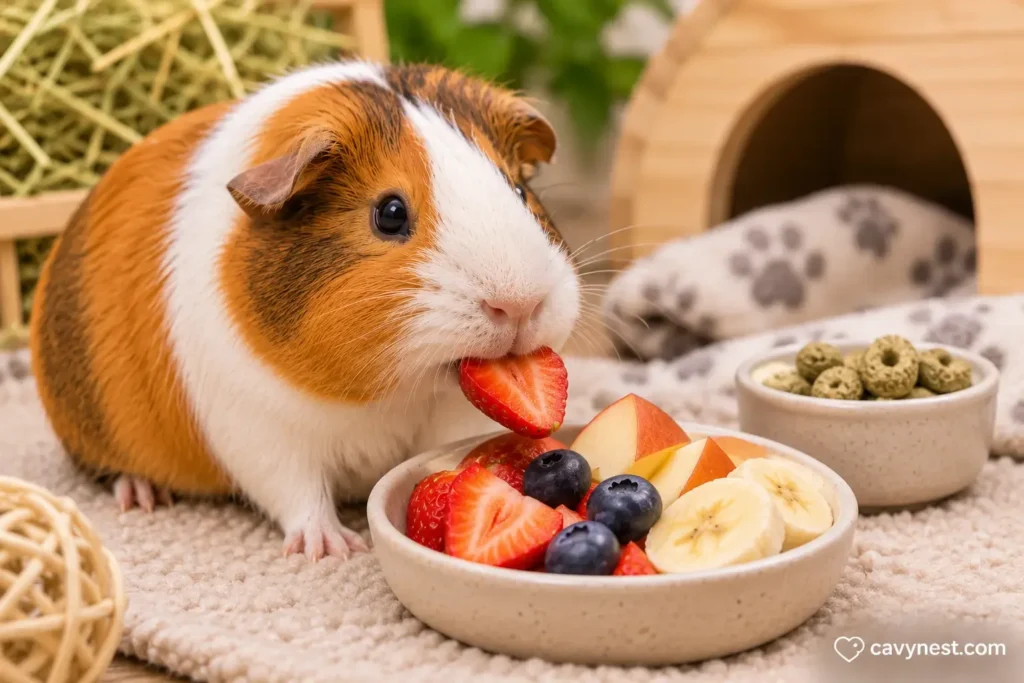
Carrot is a sugary root vegetable, so think of it as a small treat. Fruit such as seedless apple flesh, blueberries, strawberry or pear may be offered infrequently in tiny pieces. Remove apple seeds and fruit pits. A guinea pig does not need fruit to obtain vitamin C; vegetables and appropriate pellets are more dependable daily choices.
Broccoli and cauliflower can be fed in modest amounts but may contribute to gas in some animals, especially when portions increase abruptly. Kale, parsley and spinach contain useful nutrients but may provide comparatively high calcium or oxalates. Rotate them rather than relying on large daily servings, particularly for guinea pigs with a history of urinary stones; ask a veterinarian for a tailored plan.
| Food | Typical role | Practical caution |
|---|---|---|
| Grass hay (timothy, orchard) | Unlimited, every day | Fresh, dry, clean; alfalfa is generally for growing or nursing animals |
| Bell pepper, romaine, green leaf lettuce | Everyday vegetable rotation | Wash thoroughly; vary the mix |
| Cucumber, zucchini, cilantro, endive | Useful variety | Offer alongside more nutrient-dense greens |
| Broccoli, kale, spinach, parsley | Occasional or rotated cautiously | Gas and/or calcium considerations; avoid making one item the staple |
| Apple flesh, blueberries, strawberry | Small occasional treat | High sugar; remove seeds, pits and uneaten portions |
| Onion, garlic, potato, avocado | Do not feed | Potentially harmful or unsuitable |
| Bread, chocolate, nuts, seeds, cereals | Do not feed | Unsuitable for guinea pig digestion and nutrition |
Unsafe foods: what guinea pigs should never eat
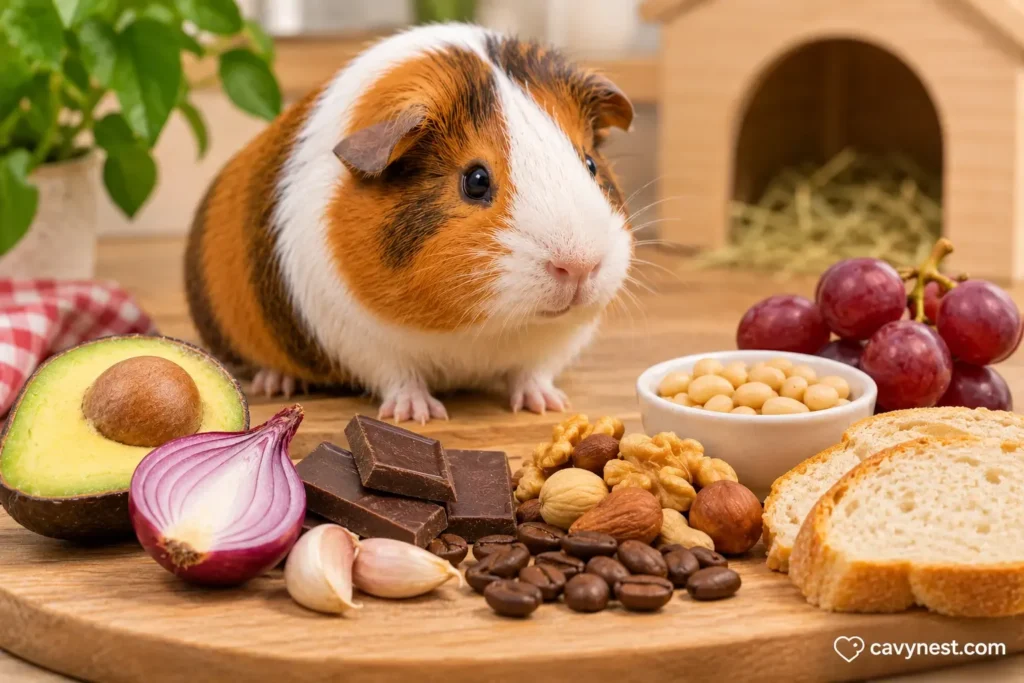
Never feed onions, garlic, chives, potatoes, avocado, mushrooms, tomato leaves or stems, or lawnmower clippings. Avoid chocolate, dairy, meat, bread, cakes, nuts, seeds, muesli mixes and other human snack foods. Tomato flesh is different from the leaves and stem: ripe fruit can be an occasional vegetable-like addition, but the green plant parts are unsafe. Iceberg lettuce offers little nutritional benefit and is best avoided.
Do not judge an unfamiliar plant by whether a guinea pig seems interested in it. Household plants, roadside forage and garden clippings may be toxic or contaminated with pesticides, exhaust residue or animal waste. Only use forage you can identify reliably and source from a clean, untreated area. When in doubt, leave it out.
How to introduce new foods and build a daily menu
When testing a new safe food, offer a tiny portion while keeping the usual hay and vegetables unchanged. Watch appetite and droppings over the next day or two. Introduce only one new food at a time, then slowly increase variety if tolerated. Wash fresh produce and remove leftovers before they decay. A sudden switch in pellets also deserves a gradual transition.
One useful routine is fresh hay and water at all times; a measured pellet ration; and a varied daily selection of washed greens including a vitamin C source. Scatter some produce in clean areas to encourage foraging, while making sure every guinea pig receives a fair share. Weigh each animal regularly and adjust portions with veterinary help when body condition changes.
- Everyday foundation: unlimited timothy or orchard grass hay.
- Daily produce: washed leafy greens and vitamin C-rich bell pepper.
- Small measured addition: plain, guinea-pig-specific fortified pellets.
- Rare treat: a tiny piece of apple without seeds or a berry.
- Never offer: onion, garlic, potato, avocado or bread.
Vitamin C, teeth, digestion and hydration
Guinea pigs cannot synthesize vitamin C. Deficiency may affect gums, joints, activity and general health. Vitamin C in pellets degrades during storage, so buy reasonably fresh products and store them as directed. Do not put vitamin C drops into drinking water: degradation and changes in taste can make dosing unreliable and reduce intake. Supplements are not automatically necessary for a healthy animal receiving a balanced diet; a vet can assess individual needs.
Water must remain continuously available. Check bottles for blockages and provide clean water in a stable vessel if appropriate for the enclosure. Eating less hay, producing fewer droppings, drooling or struggling to chew may be signs of dental or digestive problems rather than simple pickiness.
Common feeding mistakes
Mistakes often begin with well-meaning treats: filling the bowl with fruit, treating pellets as unlimited food, using rabbit mixes, making iceberg lettuce the main salad or removing hay because the animal seems to prefer vegetables. Another mistake is assuming that a food labeled natural is automatically safe. Read ingredient lists and prioritize species-specific nutritional needs.
When a food-related problem needs a veterinarian
A guinea pig that stops eating, passes markedly fewer droppings, becomes bloated, lethargic or appears painful needs prompt veterinary assessment. Do not wait for a suspected dietary problem to resolve on its own. If a dangerous item was eaten, record what, how much and when, remove access and contact an experienced veterinarian immediately. Do not attempt home antidotes or induce vomiting.
find a guinea-pig-experienced veterinarian
Final verdict: choosing food safely
The safest food list starts with what to feed abundantly—grass hay—then adds variety in modest fresh portions. Bell pepper and leafy greens are practical staples, fortified pellets are a measured supplement and fruit is optional. Avoid clearly unsuitable foods and treat any sudden appetite or stool change as a welfare concern.
Frequently asked questions
Can guinea pigs eat carrots?
Yes, guinea pigs can eat a small piece of carrot occasionally, but it is a sugary treat rather than a daily staple.
Can guinea pigs eat bananas?
Yes, a tiny piece of banana can be an occasional treat, but its sugar content makes frequent servings unsuitable.
Can guinea pigs eat tomatoes?
Yes, ripe tomato flesh can be offered in moderation; never feed tomato leaves or stems.
Can guinea pigs eat spinach?
Yes, spinach can be offered sparingly, but its calcium and oxalate content makes it a poor everyday base.
Can guinea pigs eat lettuce?
Yes, romaine and green or red leaf lettuce are suitable; avoid relying on iceberg lettuce.
Can guinea pigs eat apples?
Yes, a little apple flesh is an occasional treat; remove seeds and the core.
Can guinea pigs eat potatoes?
No, potatoes and their skins should not be fed to guinea pigs.
Can guinea pigs eat bread or crackers?
No, bread and crackers are unsuitable processed starches and should not be part of a guinea pig diet.
Do guinea pigs need vitamin C every day?
Yes, guinea pigs need dietary vitamin C daily because their bodies cannot manufacture it.
What should I do if my guinea pig stops eating?
Contact a guinea-pig-experienced veterinarian promptly; reduced eating and droppings can signal a serious emergency.
Sources and further reading
These veterinary and animal-welfare references support the feeding principles and cautions in this guide.