
Quick answer: Guinea pigs need unlimited fresh grass hay, clean drinking water, a daily variety of vegetables including vitamin C-rich bell pepper, and a small measured serving of plain guinea pig pellets. Fruit is an occasional treat, not a staple. Introduce new foods gradually and ask a guinea pig-savvy vet about illness or special dietary needs.
The most important food is not the colorful pellet mix in a pet-store bag: it is clean grass hay available all day and night. Daily fresh vegetables bring variety and vitamin C, while species-specific fortified pellets fill smaller nutritional gaps. The right proportions matter more than offering a large assortment of treats.
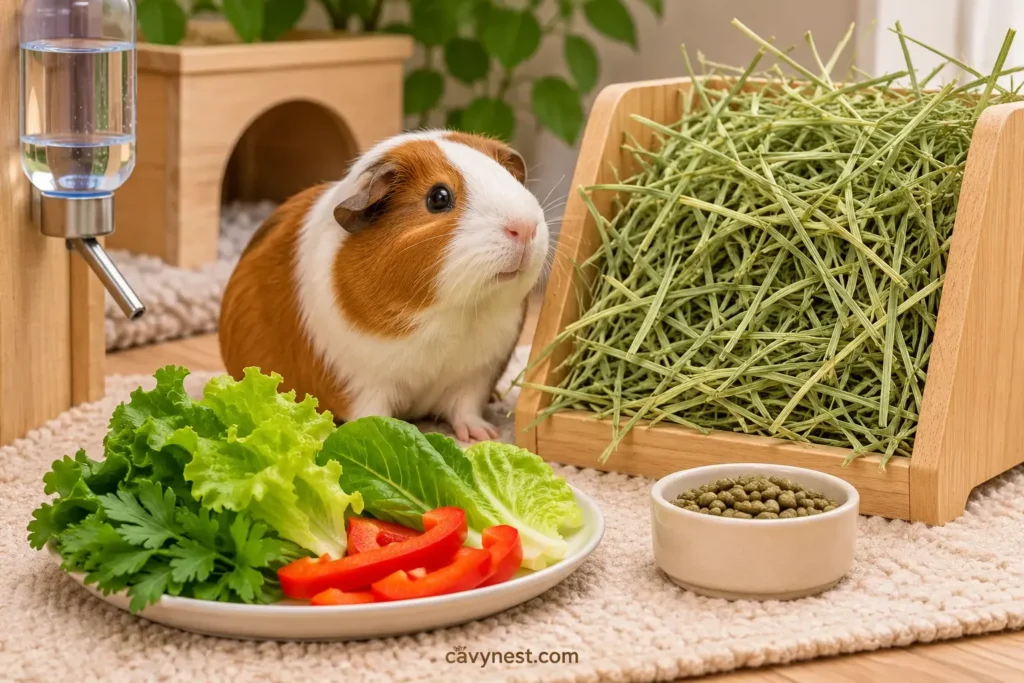
Daily essentials
| Food | Starting portion | Why it matters |
|---|---|---|
| Grass hay | Unlimited, day and night | Major fibre source; supports chewing |
| Fresh vegetables | About 1 cup daily | Variety and dietary vitamin C |
| Guinea pig pellets | About 1–2 tbsp daily | Measured fortified supplement; follow individual advice |
| Fresh water | Always available | Hydration; check the dispenser daily |
| Fruit | Tiny occasional treat | Not required for balanced nutrition |
Build the daily food bowl
Start with the four essentials
Think of a guinea pig menu in layers rather than equal portions. Unlimited grass hay is the foundation; fresh vegetables are the daily addition; fortified, uniform pellets are a modest measured supplement; clean water is continuously available. The table below is a starting point for a healthy adult rather than a prescription for every age, weight or medical history.
An approximate hay percentage describes its importance, not an instruction to weigh every blade. PDSA describes hay and grass as roughly 85–90% of the diet; portion guidance differs between veterinary sources. Appetite, body condition, stool, and your veterinarian’s recommendations matter when adjusting pellet amounts.
PDSA · Merck Veterinary Manual
Why hay must never run out
Fibre, chewing and normal behaviour
Guinea pigs are grazing herbivores. Their digestive tract depends on a steady supply of fibrous plant material, while their continuously growing teeth benefit from prolonged grinding of hay. A large morning meal of pellets cannot compensate for an empty hay rack during the night.
Put several clean piles of feeding hay around the enclosure, including near resting places. Check that every guinea pig can reach it without being displaced by a companion. Replace wet, spoiled or heavily soiled hay; use a generous open feeding area or a safe rack that cannot trap a head or foot.
Choosing hay for an adult guinea pig
Timothy, orchard and meadow hay
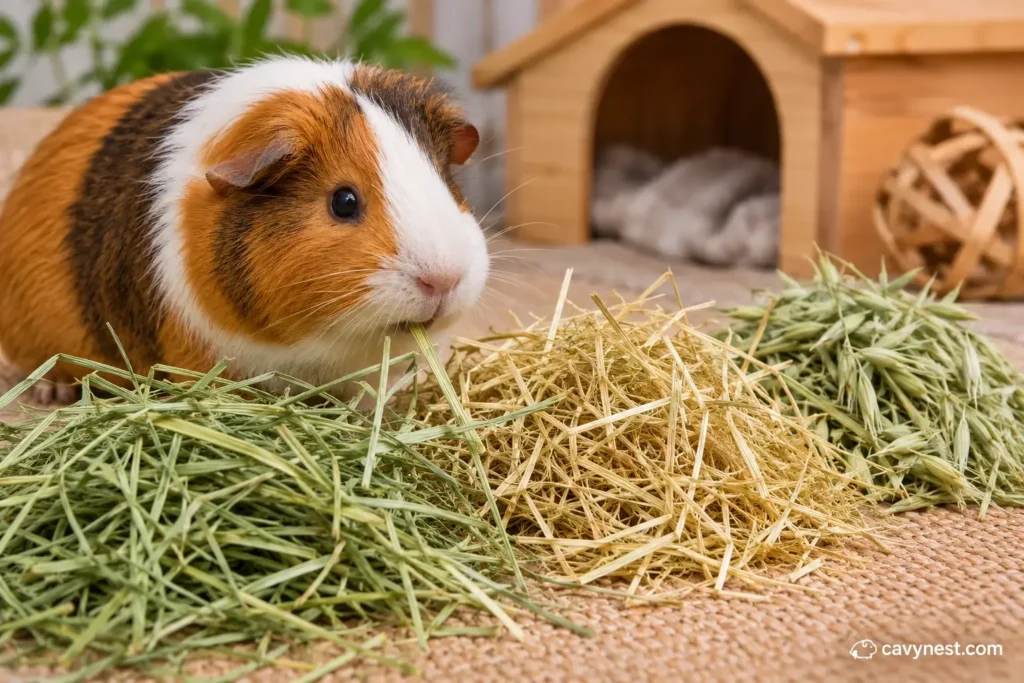
Timothy and orchard grass are sound options for most healthy adults; other clean grass hays can also be appropriate. Choose fresh-smelling, dry, leafy hay without visible mould, damp clumps, unusual dust or debris. Different cuts may vary in texture, so individual animals may prefer one grass hay over another.
Alfalfa is a legume hay richer in calcium and protein and is not usually the default unlimited hay for a healthy mature guinea pig. Young, pregnant or nursing animals may have different needs; coordinate any alfalfa feeding with a vet familiar with guinea pigs. If one hay variety is refused, change the presentation and offer another grass hay rather than withholding hay.
Fresh vegetables every day
A useful one-cup starting point
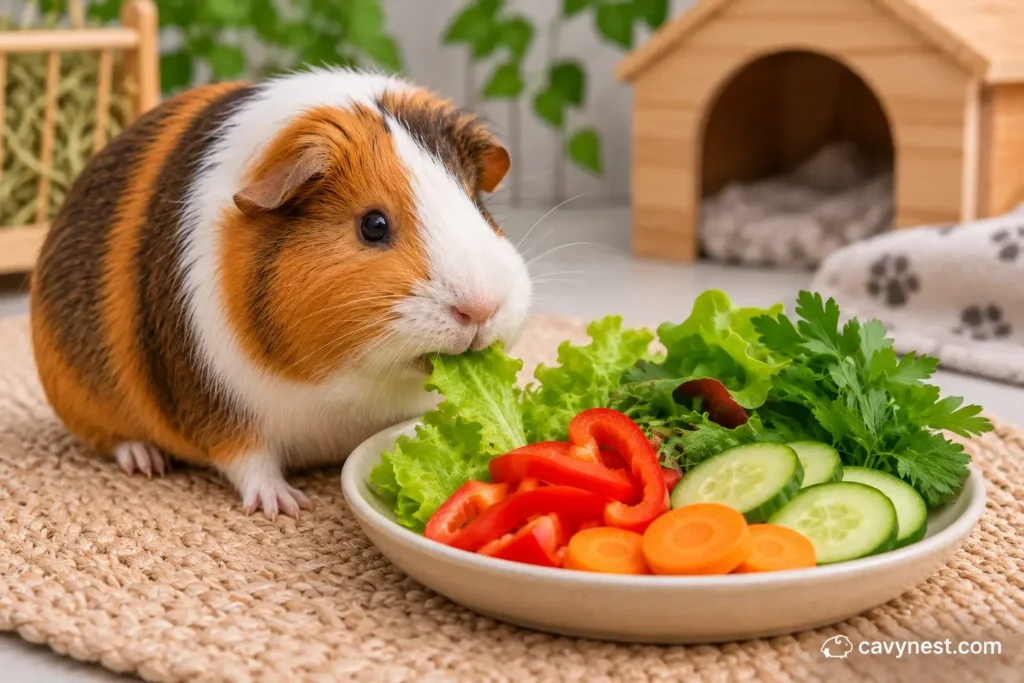
PDSA recommends about one cup of mixed fresh vegetables and greens per guinea pig each day. This is a practical starting point, not an automatic target for a tiny juvenile, an ill guinea pig or an animal receiving an individually prescribed diet. Wash vegetables, offer appropriately sized pieces and remove leftovers before spoilage.
Include vitamin C-rich bell pepper and rotate leafy greens such as romaine or red-leaf lettuce, coriander and suitable herbs. Variety spreads nutrients and avoids depending on one ingredient. Introduce one unfamiliar food in a small amount at a time, watching appetite and droppings, rather than changing the entire menu overnight.
Which vegetables are practical staples?
Bell pepper, leafy greens and rotation
Bell pepper is valuable because it supplies vitamin C without needing to be a sugary treat. Romaine lettuce and other suitable leafy greens add moisture and choice. Cucumber and courgette can contribute variety, but they should not displace the more nutritious greens and vitamin C sources.
Some acceptable foods are better rotated than given in large daily heaps. Kale, parsley and spinach may be higher in calcium or oxalates; animals with urinary problems deserve a veterinarian-tailored selection. Broccoli and cabbage can cause digestive upset in some animals when large amounts are introduced, so use modest portions and observe tolerance.
Vitamin C is non-negotiable
Food first; supplements when indicated
Guinea pigs cannot make their own vitamin C. An inadequate intake can lead to serious problems, including scurvy. A reliable daily strategy combines appropriate fresh produce with fresh fortified guinea pig pellets. Vitamin C content in pellets declines with storage, heat and exposure, so a long-opened bag is a less dependable source.
Do not put vitamin drops into drinking water: their potency can decline, taste can reduce drinking and the dose is unreliable. If food intake is restricted, disease is suspected, or a vet recommends supplementation, ask about an appropriate measured oral product and dose. More is not automatically better; needs vary with growth, pregnancy and health.
Pellets: small and simple
How much and what to buy
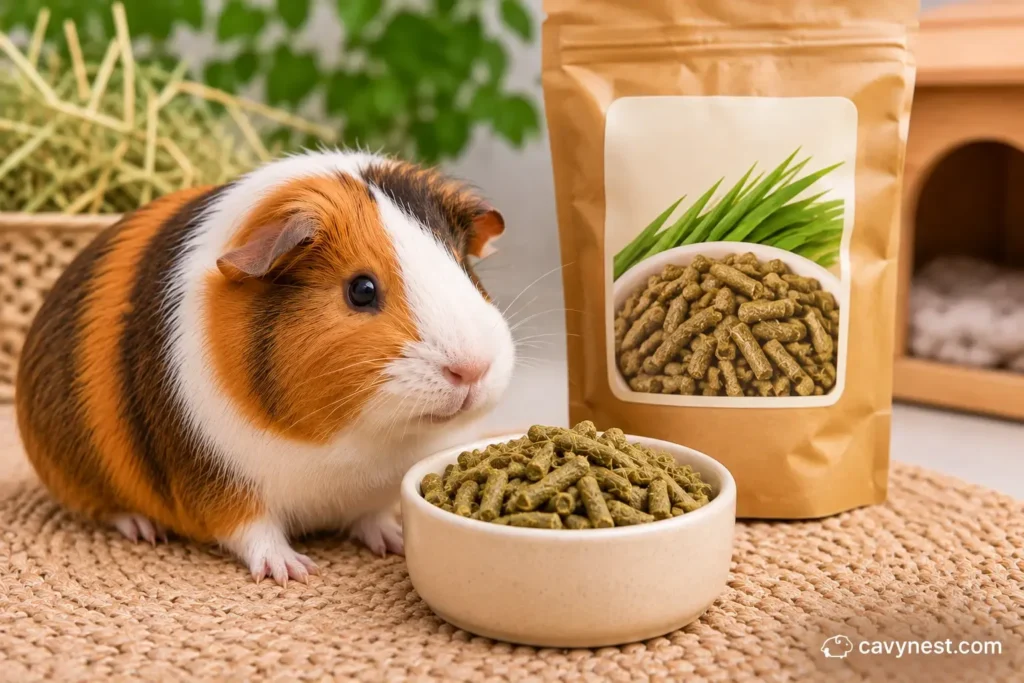
Choose uniform, grass-hay-based pellets made specifically for guinea pigs, with added stabilized vitamin C. Avoid mixes containing seeds, nuts, brightly colored pieces or dried fruit: selective feeding can undermine the balance. Rabbit feed is not a substitute because guinea pigs have specific vitamin C needs.
Adult recommendations differ: PDSA suggests about one tablespoon daily, while the Merck pet-owner guide describes about two tablespoons. A practical range is one to two tablespoons per healthy adult, adjusted to package instructions, body condition and veterinary advice. Measure rather than continuously topping up a large bowl.
Water and clean feeding equipment
Check access twice daily
Provide fresh drinking water at all times. A securely attached bottle or stable, clean bowl may work; confirm that the animal actually drinks and that spouts do not stick. In households with several guinea pigs, multiple drinking points reduce competition.
Rinse vessels, refresh water daily and check more often in hot weather. Remove spoiled vegetables and replace contaminated pellets instead of pouring fresh pellets on top. Keep storage containers cool, dry and away from sunlight, and buy amounts that can be used while the food is fresh.
What a realistic feeding day looks like
Morning and evening checklist
Morning: verify that hay is plentiful, replace water, offer a portion of washed mixed greens and inspect yesterday’s uneaten food. Measure pellets instead of estimating by the size of the bowl. Observe who approaches food and whether any animal is being prevented from eating.
Evening: top up clean hay, offer the remaining vegetables if you split the daily allowance, check the water supply and remove perishables. At least weekly, record body weight on a reliable scale; gradual trends can reveal trouble before a dramatic change in appearance.
Foods to avoid completely
Avoid hazardous or nutritionally unsuitable items
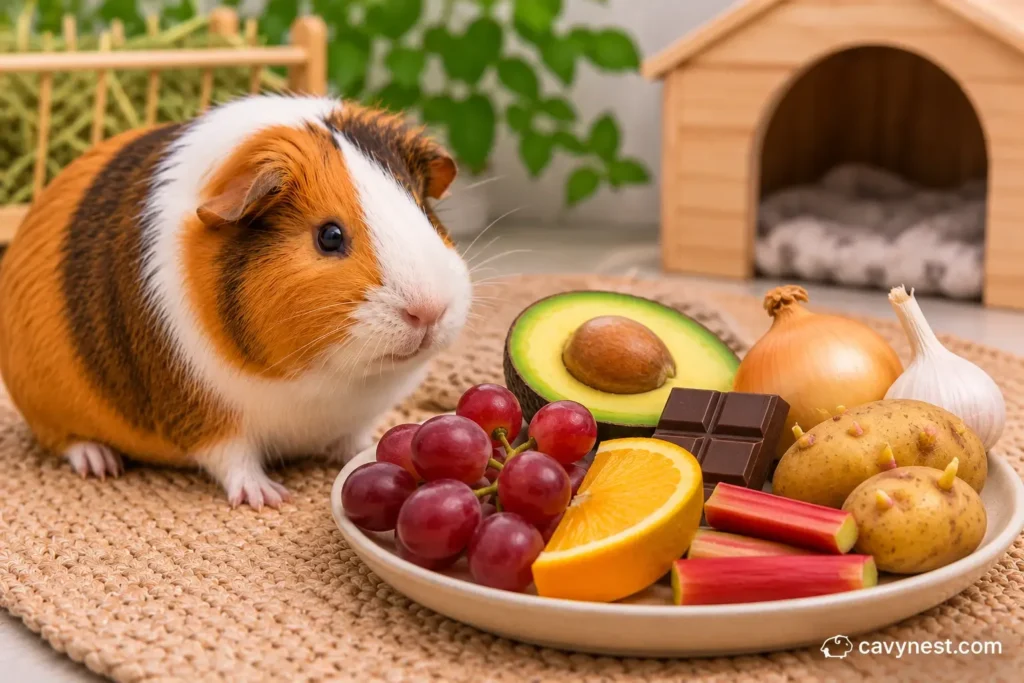
Do not feed onion, garlic or other alliums, potato or potato leaves, rhubarb, tomato leaves, chocolate, sweets, dairy, meat, bread, nuts or seeds. Avoid lawnmower clippings: cut grass heats and ferments quickly and can upset digestion. Do not offer unidentified wild plants or forage from pesticide-treated or traffic-contaminated areas.
Iceberg lettuce contributes little nutrition compared with mixed leafy greens and is a poor main vegetable. High-sugar processed treats, yogurt drops and muesli mixes are not needed. If a guinea pig has eaten a potentially poisonous substance, contact a veterinarian promptly rather than attempting a home remedy.
Fruit and treats
Keep sweet foods occasional
Fruit should be a small, infrequent extra rather than a daily vegetable replacement. An occasional tiny piece of apple without seeds, a blueberry or a small strawberry is enough; different veterinary resources set different treat frequencies, so keeping it rare and modest is prudent.
Carrot and sweet vegetables can also raise sugar intake when fed generously. A better enrichment reward is a sprig of an appropriate herb, a few leaves of a familiar green or hay tucked into a safe foraging toy. Treats should never crowd out hay or reduce normal chewing time.
Pups, pregnant guinea pigs and seniors
When the adult template is not enough
Young, growing guinea pigs and pregnant or lactating females can have different energy, protein, calcium and vitamin C requirements. Some veterinary sources recommend alfalfa-based hay or pellets at these life stages. An adult’s measured pellet recommendation should not simply be imposed on a growing pup.
Older guinea pigs may develop dental disease, arthritis or other conditions that affect feeding. Do not improvise high-calcium diets or vitamin doses based solely on age. Ask an experienced veterinarian to adjust portions and monitor body weight, teeth, hydration and appetite where special needs arise.
Changing foods without upsetting digestion
Use gradual transitions
Guinea pigs may form strong preferences and can refuse unfamiliar smells and textures. When changing a pellet brand, blend a little of the new food into the current pellets and increase it gradually over several days or longer as tolerated. Keep hay reliably available throughout the transition.
For new vegetables, start with a small washed piece, then introduce the next item only after stools and appetite remain normal. Do not force variety when an animal is sick, and never fast a guinea pig to make it accept a new food. Persistent soft stool, reduced eating or abnormal behavior calls for veterinary guidance.
Mistakes that make a good diet fail
Recognise the patterns
The most common practical error is giving pellets center stage while hay becomes an afterthought. Another is offering one favorite vegetable daily and assuming it covers vitamin C, fibre and all micronutrients. Routine matters more than elaborate shopping: hay, diverse appropriate greens, fresh pellets and water should be consistent.
Other errors include abrupt menu changes, leaving old fresh food to rot, trusting vitamin drops in water, buying huge pellet sacks that go stale, and using treats to compensate for poor appetite. If the animal stops eating normally, investigate immediately instead of enticing it with sugary snacks.
When poor appetite is an emergency
Watch food, droppings and weight
A guinea pig that stops eating, produces markedly fewer droppings, becomes bloated or seems lethargic needs prompt veterinary assessment. Dental pain and gastrointestinal problems can escalate quickly; waiting until tomorrow can be dangerous. Do not try to diagnose the cause from a food list alone.
Keep a note of the last normal meal, pellet and hay consumption, stool output, weight and any possible exposure to harmful food. For help finding a clinician, CavyNest has a guide to locating guinea pig veterinarians; verify that the clinic actually treats guinea pigs before travelling.
Final verdict
A repeatable routine beats complicated menus
For most healthy adult guinea pigs, the best daily diet is plain and predictable: unlimited clean grass hay, around a cup of varied appropriate vegetables including a vitamin C source, a small measured serving of guinea pig pellets, and constant fresh water. Keep fruit optional and avoid unsuitable foods.
Use stool, appetite, weight and professional advice to judge whether the routine suits the individual. Different reputable guides disagree slightly on pellet quantities; that is a reason to monitor and personalize rather than announce a single perfect tablespoon count for every guinea pig.
How to shop for a week of guinea pig food
Buy for freshness rather than maximum variety
A practical shopping plan starts with a dependable supply of grass hay, one suitable bag of fortified guinea pig pellets, and a modest selection of fresh vegetables that the animals already tolerate. Buying six unfamiliar vegetables at once is not automatically healthier than offering three familiar types and introducing one new item carefully. Freshness, safe storage and consistent access to hay matter more than an impressive-looking shopping basket.
Choose vegetables that look crisp, without slime, mould or damaged wet patches. Store them appropriately for the produce concerned, wash before serving and discard spoiled material. If a bag contains more leafy greens than the household can use before they wilt, buy less next time. This reduces waste and makes it easier to notice what your guinea pigs actually eat rather than what is merely placed in the enclosure.
Read pellet labels before comparing prices
Look for a plain, uniform pellet formulated specifically for guinea pigs, with vitamin C included and feeding guidance on the label. A colourful assortment of flakes, seeds, dried fruit and pellets may seem exciting, but it allows selective feeding: an animal can pick out the sweetest pieces and leave the balanced portion behind. A simple formula is usually easier to portion and monitor. Compare the recommended daily allowance, not just the size of the bag or its marketing claims.
Check the best-before date and storage directions, and avoid keeping opened feed so long that its quality becomes questionable. Vitamin C is not perfectly stable during prolonged storage, which is one reason a reliable daily vegetable source remains important. Do not assume that doubling pellets will fix a suspected nutritional gap; it can displace hay. If you are unsure whether a product fits a particular animal, show its ingredient label to an experienced veterinarian.
Making vegetable portions useful instead of arbitrary
Measure the offer, then observe what is actually eaten
Guidelines often describe roughly a cup of mixed vegetables for an adult guinea pig each day, but a cup is a household measure, not an exact nutritional prescription. Tightly packed leaves and loosely arranged pepper pieces have different weights. Use the measure as a starting framework and adjust with veterinary advice for body condition, appetite, health and the rest of the diet. Treat different vegetables as ingredients with different roles, not interchangeable units.
Bell pepper can contribute vitamin C, while varied suitable leafy vegetables help provide interest and moisture. Foods such as carrot are better considered small extras rather than the entire daily portion. Some leafy greens are high in calcium; they should not dominate the menu, especially when an animal has a urinary problem that requires individual advice. There is no need to chase a perfect mathematical ratio of vegetables every morning. A repeatable, balanced pattern is more useful.
What to do with leftovers
Check the bowl after a feeding session. If most vegetables remain untouched, consider whether they were unfamiliar, offered in excessive quantity, spoiled, or difficult for an animal to access. Remove uneaten fresh food before it deteriorates, especially in warm rooms. Do not keep topping up yesterday’s wilted vegetables to make the dish appear full. A guinea pig that eats hay normally but rejects one vegetable is not the same situation as an animal refusing nearly all food.
When there is more than one guinea pig, the empty bowl does not prove each animal received its share. A confident companion may reach the best pieces first. Offer food in separate areas and observe both animals without turning every meal into a struggle. Check whether quieter individuals chew and swallow comfortably. This is particularly useful after a new pairing or when a cage mate begins losing weight.
Fresh grass and foraging without avoidable hazards
How fresh grass differs from hay
Clean fresh grass can add variety, but it does not replace the need for consistently available hay in an indoor feeding routine. Hay is dried grass; its dry, fibrous structure is practical for continual nibbling. Fresh grass brings extra water and may be eagerly eaten, so introduce it gradually rather than suddenly offering a large pile to an animal accustomed only to hay. Watch droppings and appetite during any dietary transition.
Use only grass from a site you know has not been treated with pesticides, herbicides or other potentially harmful chemicals. Avoid roadside areas and locations contaminated by animal waste. Do not feed grass collected from unknown public lawns. Lawn-mower clippings are unsuitable because they can heat and ferment rapidly after cutting. Hand-picked clean grass is a different proposition from a compressed bag of clippings.
Foraging is also an enrichment decision
Hide small amounts of familiar, safe vegetables among hay or provide several feeding stations to encourage natural searching and movement. Keep the approach simple enough to clean. Avoid tying edible items to unsafe string or placing vegetables where they will become soaked with urine. A good enrichment idea should increase opportunities to explore while maintaining normal intake; it should not make an animal work so hard for food that a timid companion gets less.
Outdoor feeding brings additional welfare considerations. Shade, secure fencing, temperature, predators and escape routes matter as much as the grass itself. Never assume an animal is safe outdoors because the lawn looks green. If you cannot supervise a secure setup, provide hay-based foraging activities indoors instead. The aim is a predictable feeding experience, not an elaborate performance.
Track the diet through behaviour, droppings and weight
Build a baseline before something changes
A short written record can be more informative than memory. Note which vegetables are accepted, when pellets are supplied, whether hay needs frequent topping up, and whether the water container functions correctly. Weigh each guinea pig regularly on a stable scale and record the result with the date. Individual trends are more useful than comparing one animal to a generic internet weight chart. If a change seems sudden or persistent, contact a veterinarian.
Watch for normal chewing, active interest in hay and a familiar pattern of droppings. Smaller or fewer droppings can accompany reduced food intake, but they do not diagnose the underlying problem. Drooling, dropping food from the mouth, preference for soft foods or difficulty chewing can signal dental or other health concerns. Even if the animal still accepts a favourite pepper strip, that does not prove adequate overall feeding.
When home adjustments are not enough
If appetite drops markedly, droppings become scarce, the abdomen appears distended, or the guinea pig seems painful or lethargic, arrange urgent veterinary assessment rather than spending a day experimenting with different treats. Guinea pigs can deteriorate quickly when they stop eating. Do not force-feed an unwell animal without veterinary direction because the safest next step depends on the cause and condition.
A feeding diary helps the veterinarian distinguish a recent food transition from a longer-term pattern. Bring pellet packaging, examples of the usual vegetables and weight records when possible. Mention recent changes in housing, companions and routine. This information does not replace examination, but it makes the history more precise and helps the clinician advise on a safe recovery plan.
Frequently asked questions
Can guinea pigs eat hay every day?
Yes. Guinea pigs should have unlimited clean grass hay available every day and night to support normal digestion and tooth wear.
How much veg does one guinea pig need daily?
About one cup of varied suitable vegetables per healthy adult each day is a commonly recommended starting point; adjust with veterinary advice for special needs.
Can guinea pigs eat carrots every day?
Carrots are better treated as a small occasional extra because they are relatively sugary; offer a variety of leafy greens instead.
Do guinea pigs need pellets?
Most pet-care guides recommend a modest measured daily portion of fortified guinea pig pellets alongside unlimited hay and fresh greens.
Can a guinea pig eat rabbit pellets?
No. Rabbit pellets are not a suitable replacement for guinea pig pellets because they generally do not provide the vitamin C guinea pigs require.
Are vitamin C drops in water effective?
They are not recommended because vitamin C can degrade in water and the altered taste may reduce drinking.
Can guinea pigs eat fresh grass?
Yes, clean untreated fresh grass can be suitable when introduced gradually, but never feed lawnmower clippings.
Is fruit safe for guinea pigs?
Small amounts of selected fruit can be offered occasionally, but fruit is not a daily staple because of its sugar content.
What should I do if my guinea pig refuses food?
Seek prompt veterinary advice, especially if hay intake falls or droppings decrease, because not eating can become an emergency.