
Choose a licensed veterinarian who regularly examines guinea pigs, can explain species-specific dental and digestive risks, and has a clear plan for urgent care. Start with an exotic-mammal veterinary directory, then call clinics to confirm actual guinea pig caseload and available equipment. Keep an emergency option ready before a problem occurs.
Quick answer
Choose a licensed veterinarian who regularly examines guinea pigs, can explain species-specific dental and digestive risks, and has a clear plan for urgent care. Start with an exotic-mammal veterinary directory, then call clinics to confirm actual guinea pig caseload and available equipment. Keep an emergency option ready before a problem occurs.
Quick picks
- Best starting point: AEMV Find a Vet listing, followed by a phone screening.
- Best qualification signal: Documented guinea pig experience; specialist certification is an additional credential, not a requirement.
- Best emergency preparation: An open emergency clinic that confirms it can stabilize guinea pigs and arrange a referral.
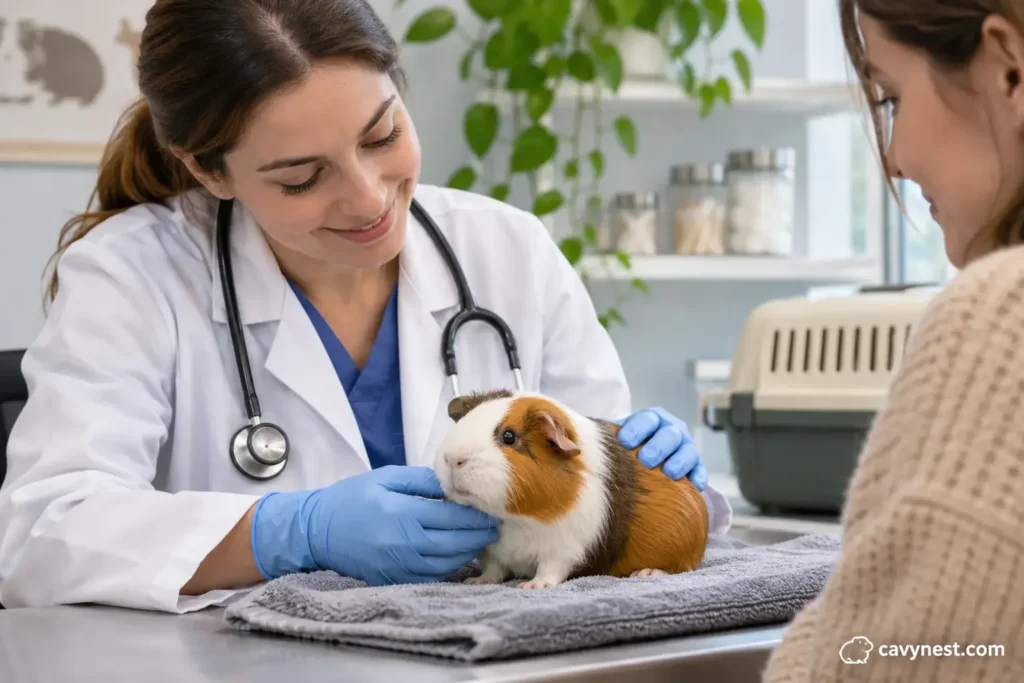
Why guinea pigs need species-aware care
A small patient is not a small dog
Guinea pigs have continuously growing teeth and a digestive system that depends on consistent fibrous food intake. A veterinary team should know how appetite changes, altered droppings and oral pain can interact. Routine treatment protocols designed for dogs and cats cannot simply be copied to guinea pigs.
Experience matters more than advertising
The word “exotic” on a clinic website is only a starting point. It might refer to birds, reptiles or rabbits rather than cavies. Ask which clinician actually handles guinea pig cases, how frequently, and who provides coverage when that person is away.
Where to search for a guinea pig veterinarian
Begin with reputable directories
The Association of Exotic Mammal Veterinarians offers a Find a Vet feature for clinicians interested in exotic mammals. Search locally, widen the radius when necessary, and treat directory participation as a lead rather than proof that every listed doctor has extensive guinea pig experience.
Check credentials without confusing them
The American Board of Veterinary Practitioners recognizes Exotic Companion Mammal Practice as a veterinary specialty. Board certification is a meaningful additional qualification, but many competent guinea pig veterinarians are not board-certified. Ask for practical experience, not just a title.
Use referrals and local verification
Local guinea pig rescues, veterinary teaching hospitals and your regular veterinarian may point you toward suitable practices. Confirm the named veterinarian still works there, is taking new patients, and personally sees guinea pigs. Online star ratings cannot replace these checks.
AEMV veterinarian search · ABVP exotic companion mammal credentials
Explore CavyNest’s local veterinary finder
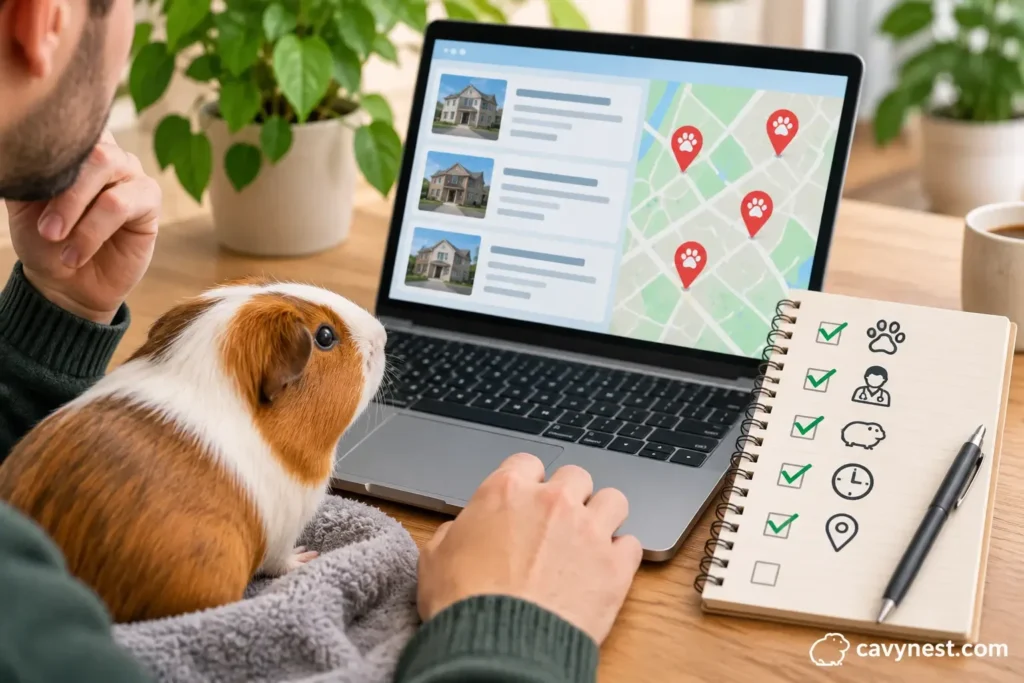
Questions to ask before booking
Ask about current caseload and procedures
“How many guinea pigs does this veterinarian see in a typical month?” is more useful than “Do you see exotics?” Also ask whether the clinic can examine cheek teeth when indicated, obtain appropriate imaging or refer for complex dental work, and monitor patients after anesthesia.
Clarify diagnostic and emergency capacity
Ask whether the practice has small-patient scales, appropriate pain management and heating support, relevant laboratory access, and an established referral pathway. A clinic need not perform every procedure onsite, but it should be transparent about what it can and cannot offer.
Compare access, communication and cost
Find out the typical exam fee, how estimates are approved, how records are shared, when follow-up results arrive and what happens after hours. A clear triage process and willingness to explain uncertainty are positive signs. Price alone should not decide your choice.
How to compare clinics fairly
Compare the clinical plan, not slogans
A strong clinic describes who will see your pet, how they assess urgent symptoms and when they refer. An unverified promise to treat “all exotics” is weaker than a specific response about guinea pigs.
Emergency-only is not the same as a regular veterinarian
Some hospitals stabilize an animal outside working hours but do not offer species-specific follow-up or advanced procedures. Keep a daytime guinea pig clinician and an emergency contact; they may be different facilities.
How to assess your options
| Factor | Positive signal | Verify before booking |
|---|---|---|
| Regular guinea pig visits | Named clinician with recent cavy cases | Only “we treat exotics” on the website |
| Dental evaluation | Explains cheek teeth and when to image or refer | Promises a full dental assessment by looking at incisors alone |
| Emergency cover | Confirms which hours and which facility accepts cavies | Assumes a 24-hour hospital sees every species |
| Fees and follow-up | Explains estimates, records and rechecks | Will not explain who handles complications |
What a first guinea pig appointment should cover
History, weight and daily habits
Bring the guinea pig’s age, diet, medication list, housing details, recent weight records, and the timing of any change in eating or droppings. The clinician should review activity, hydration, urination and social behavior rather than checking the coat alone.
A careful physical and mouth examination
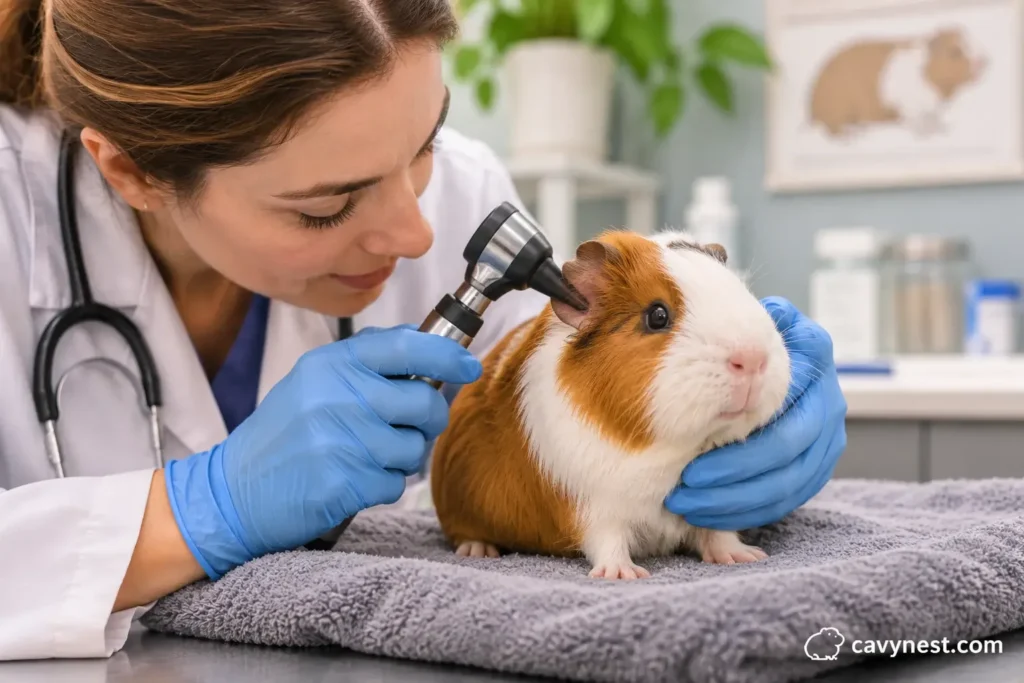
An examination can include body condition, eyes, nose, respiratory effort, heart and lungs, feet and skin, abdomen, and visible teeth. Guinea pig cheek teeth can be difficult to assess in an awake animal; a normal-looking pair of front incisors does not rule out deeper dental problems.
Deciding when tests are appropriate
Depending on signs, a veterinarian may discuss imaging, a more detailed oral examination or other tests. Not every healthy guinea pig needs every test. Ask what question a test answers, the benefit and risk, and what a referral would change.
Merck veterinary dental disease guidance · NC State veterinary guinea pig care
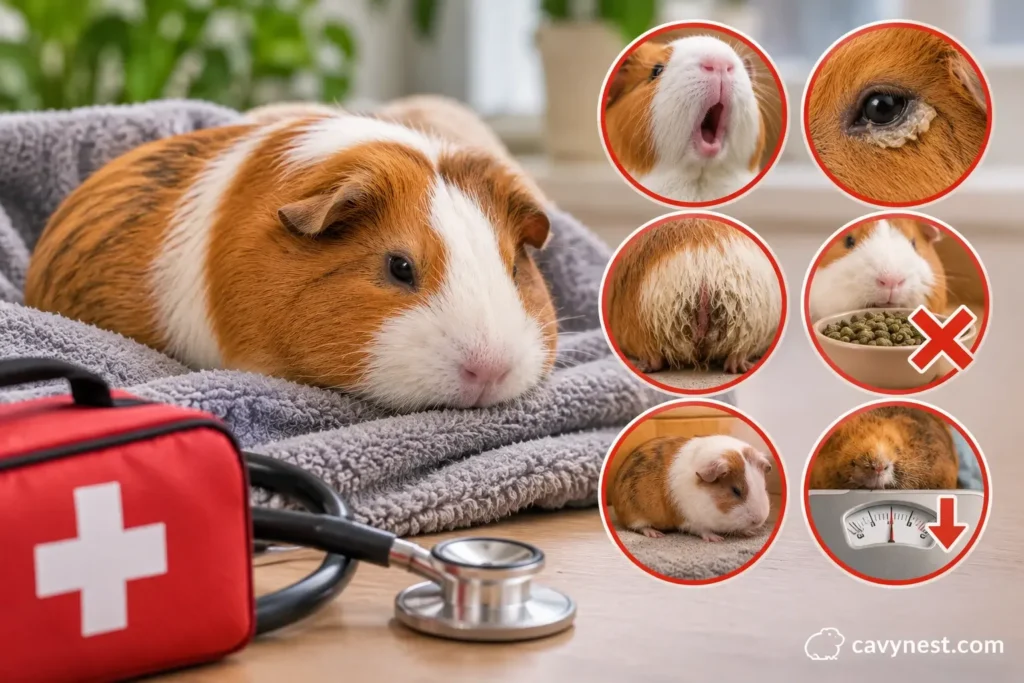
Urgent signs: when not to wait
Eating and droppings are key indicators
A guinea pig that stops eating, has markedly fewer droppings, becomes unusually quiet or seems painful needs prompt veterinary advice. Do not wait for an arbitrary number of hours before calling; deterioration can be rapid.
Breathing or collapse requires emergency action
Open-mouth or labored breathing, collapse, seizures, severe weakness, a swollen painful abdomen and inability to urinate warrant immediate emergency contact. Phone ahead while arranging transport so the hospital can confirm that it accepts guinea pigs.
Avoid improvised medication and force-feeding
Never give leftover antibiotics, human painkillers or another species’ medication. Some drugs are particularly unsafe for guinea pigs. Do not force-feed a distressed or bloated guinea pig without veterinary direction; an obstruction or aspiration risk must be considered.
UC Davis exotics emergency feeding guidance
Transport and appointment preparation
Make the carrier calm and secure
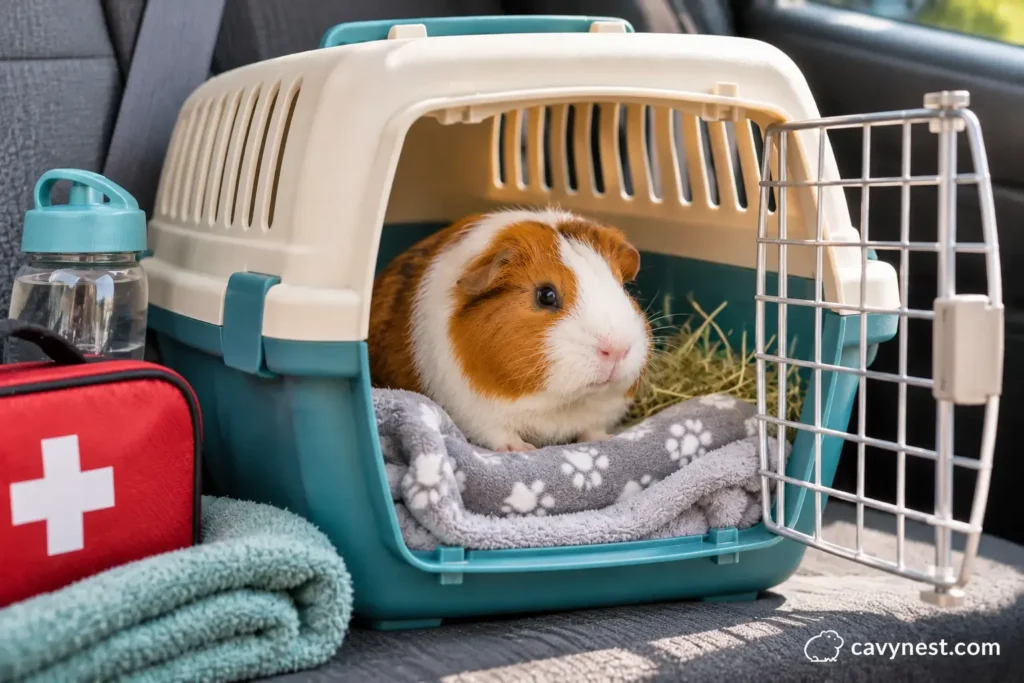
Use a rigid, ventilated carrier with stable footing, clean absorbent material and a familiar handful of hay. Protect the animal from heat, cold and direct sunlight. Avoid loose heavy items that could move during the trip.
Bring observations, not guesses
Videos of unusual breathing or movement, a photograph of abnormal droppings, and dated weight readings can help the clinician understand intermittent signs. Write down when symptoms began, what changed and any medicines already given.
Plan for companion animals sensitively
Ask whether a bonded companion should accompany the patient; this depends on the reason for the visit, clinic policy and the animals’ welfare. Do not assume separating or transporting both is always preferable.
Routine care, follow-up and realistic costs
Schedule preventive reviews
The RSPCA recommends veterinary check-ups at least annually. Young healthy animals may be seen yearly, while older guinea pigs or those with ongoing conditions may need more frequent appointments tailored by their clinician.
Know the potential extra expenses
Consultation charges vary by region and hospital. Dental imaging, emergency assessment, hospitalization and referral can cost substantially more than a routine visit. Request an itemized estimate and ask about payment options before non-emergency procedures.
Keep useful medical records
After the visit, save weight, examination findings, prescriptions, test results and a written recheck plan. Ask what signs require calling earlier and which clinic to contact outside normal hours.
RSPCA guinea pig health advice
Common mistakes when choosing a vet
Choosing solely by distance or reviews
A nearby clinic may be helpful for emergency stabilization but may not have regular cavy caseload. Conversely, the most distant specialist is not automatically the best option for every routine issue.
Treating “eats a little” as reassuring
Nibbling a favorite treat does not prove normal intake. Reduced hay consumption, smaller droppings, weight loss or drooling may indicate a serious underlying problem.
Trying home dental treatment
Never clip overgrown teeth yourself. Dental disease can involve the cheek teeth and jaw and requires professional assessment and appropriately performed treatment.
Final verdict: build a two-clinic plan
A practical decision rule
Select a routine veterinarian who confirms meaningful guinea pig experience, communicates clearly and knows when to refer. Separately identify an after-hours facility that will accept guinea pigs. Save both phone numbers, directions and transport arrangements before illness occurs.
Source transparency
This article is educational, not a diagnosis or a personalized treatment plan. Clinical guidance comes from veterinary and animal-welfare organizations; provider availability and fees must be confirmed directly with each clinic.
Read our editorial policy · Learn about CavyNest
Frequently asked questions
What kind of vet treats guinea pigs?
A veterinarian experienced with guinea pigs or exotic companion mammals is the best starting point. Confirm that the individual clinician—not only the clinic—regularly sees cavies.
Can a regular dog-and-cat vet see my guinea pig?
Yes, some general-practice veterinarians also have suitable guinea pig experience. Ask about their caseload, equipment and referral arrangements before booking.
How do I find a guinea pig vet near me?
Start with the AEMV directory, local referrals and veterinary teaching hospitals, then call each practice to confirm guinea pig appointments and availability.
Does my guinea pig need an annual check-up?
Yes, the RSPCA recommends at least one veterinary check-up each year. Older or chronically ill guinea pigs may need more frequent visits.
What if my guinea pig stops eating?
Contact a veterinarian promptly if your guinea pig stops eating. Reduced droppings, pain or lethargy increase the urgency; do not wait for a fixed time threshold.
Can a guinea pig have dental problems with normal front teeth?
Yes. The cheek teeth may be affected even when the incisors look normal, so chewing difficulty or drooling warrants a veterinary assessment.
Should I take my guinea pig to an emergency vet?
Yes, for severe breathing difficulty, collapse, seizures, a painful swollen abdomen or inability to urinate, contact an emergency clinic immediately and confirm it accepts guinea pigs.
Can I give my guinea pig leftover antibiotics?
No. Some antibiotics can seriously harm guinea pigs, so use only medication prescribed specifically for that animal by a veterinarian.
What should I bring to the first visit?
Bring a secure carrier, diet and medication information, recent weights, symptom timings and any relevant photos or videos.
Is board certification required for a good guinea pig vet?
No. Board certification in exotic companion mammal practice is valuable, but hands-on guinea pig experience and an appropriate clinical approach also matter.