
Guinea pig care for beginners starts with a compatible guinea pig companion, a spacious ground-level enclosure, unlimited grass hay, daily vitamin-C-rich vegetables, fresh water, and a veterinarian who treats guinea pigs. Before bringing animals home, plan daily cleaning and observation and a longer-term budget for veterinary care. Guinea pigs are gentle but not low-maintenance starter toys.
Quick answer
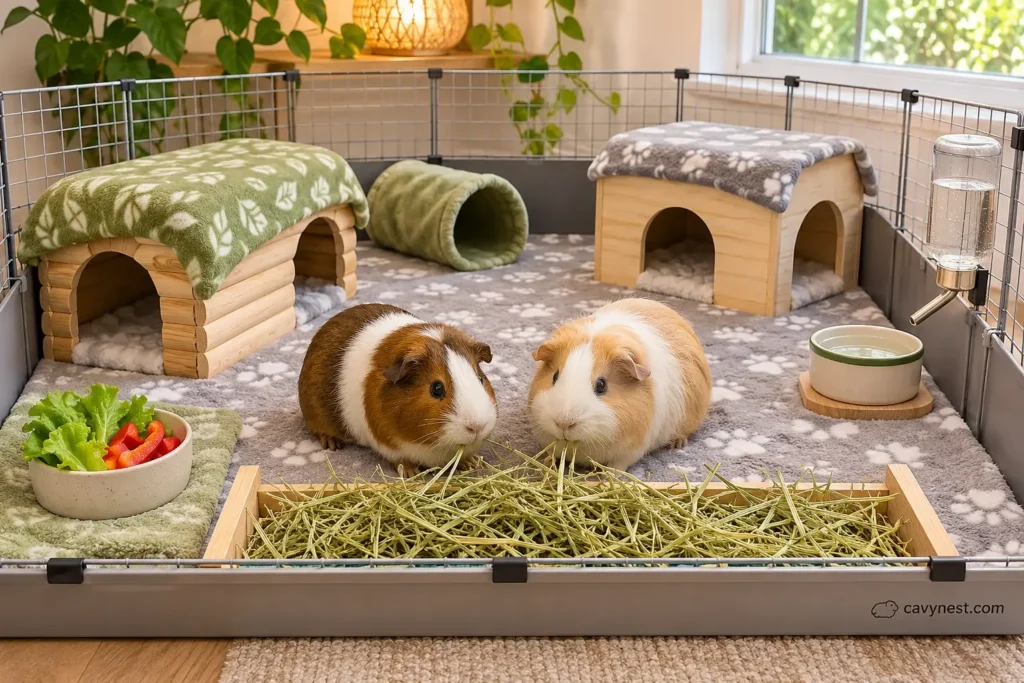
A good first setup for guinea pigs includes a suitably bonded pair or group, generous unobstructed floor space, soft dry bedding, more hides than animals, unlimited grass hay, appropriate guinea pig pellets, vegetables supplying vitamin C, and constant clean water. Observe appetite and droppings every day; a guinea pig that stops eating needs urgent veterinary advice.
At a glance: sensible first choices
- Best first purchase: a spacious, ventilated enclosure with a solid, soft floor, rather than a tall multi-storey cage.
- Best feeding priority: constant quality grass hay, with fresh vegetables, species-specific pellets and water.
- Best social plan: adopt an already compatible pair from a reputable rescue, with enough room and separate resources.
- Best health preparation: locate a guinea-pig-experienced veterinarian before an emergency.
What to prepare before bringing guinea pigs home
Commitment, company and household fit
Guinea pigs commonly live several years; the RSPCA cites around five to six years, while the PDSA gives a broader average of four to eight. Plan for food, bedding, medical expenses, holidays and a safe caretaker throughout that commitment. They are prey animals; being picked up can be frightening, even when they are becoming comfortable with people.
A companion is part of their care
Guinea pigs are social and should not routinely live alone. A previously bonded pair is often easier for a newcomer to manage than introducing strangers. Compatible same-sex groups or appropriately neutered mixed groups can work, but personality, introductions and room matter. Never assume two unfamiliar guinea pigs can simply be dropped into a small cage together.
Plan the first 24 hours
Prepare enclosure, hay, water, food bowls or stations and hideouts in advance. Ask the rescue or previous caretaker what food the animals currently eat, then make any necessary changes gradually. Keep the first day calm, allow voluntary exploration, and check eating and droppings rather than pushing frequent cuddling.
Guinea pig care for beginners: enclosure and bedding
Choose floor space over height
Aim well beyond bare minimum cage dimensions. Merck cites 7.5 square feet for one guinea pig plus additional room for each companion, while humane organizations stress that bigger is better. For a pair, choose the largest practical continuous floor space; exact rescue adoption requirements can be stricter. Ramps and shelves cannot replace a spacious main floor.
Safe flooring, shelter and air
Provide a solid floor with absorbent, dust-controlled bedding or properly maintained fleece. Avoid bare wire floors, poorly ventilated aquariums and strong-smelling cedar products. Place at least one more hide than the number of guinea pigs; ideally use hides with multiple exits so one animal cannot trap another. Supply separate hay and water access points where competition occurs.
Temperature and location
Place the enclosure indoors in a stable, draft-free, ventilated room, away from direct sun, heaters, tobacco smoke and loud speakers. Guinea pigs are vulnerable to overheating; watch weather changes closely. Avoid placing the enclosure where cats or dogs can reach through or jump in. Check humidity and damp bedding because wet surfaces can harm skin and feet.
What guinea pigs should eat every day
Grass hay is the non-negotiable base
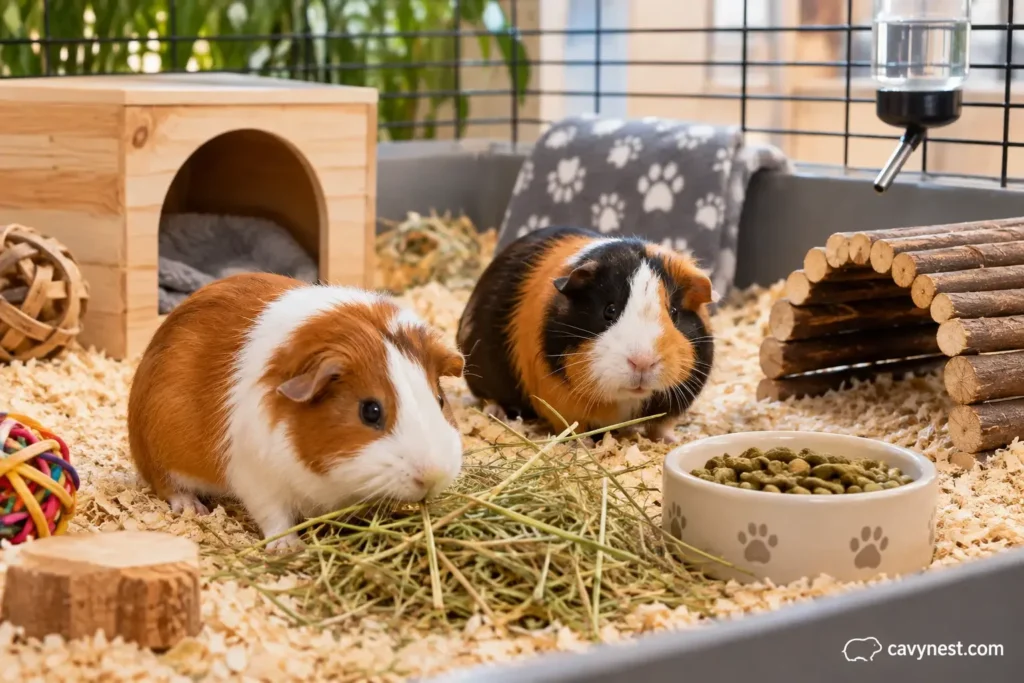
Provide unlimited fresh, sweet-smelling grass hay such as timothy, orchard or meadow hay. Its fibre supports normal gut activity and long chewing helps wear constantly growing teeth. Replace hay that becomes damp or soiled, and spread piles around the living space for foraging. Alfalfa is not the usual staple for healthy adults; life stage and veterinary advice can change the plan.
Vegetables, vitamin C and pellets
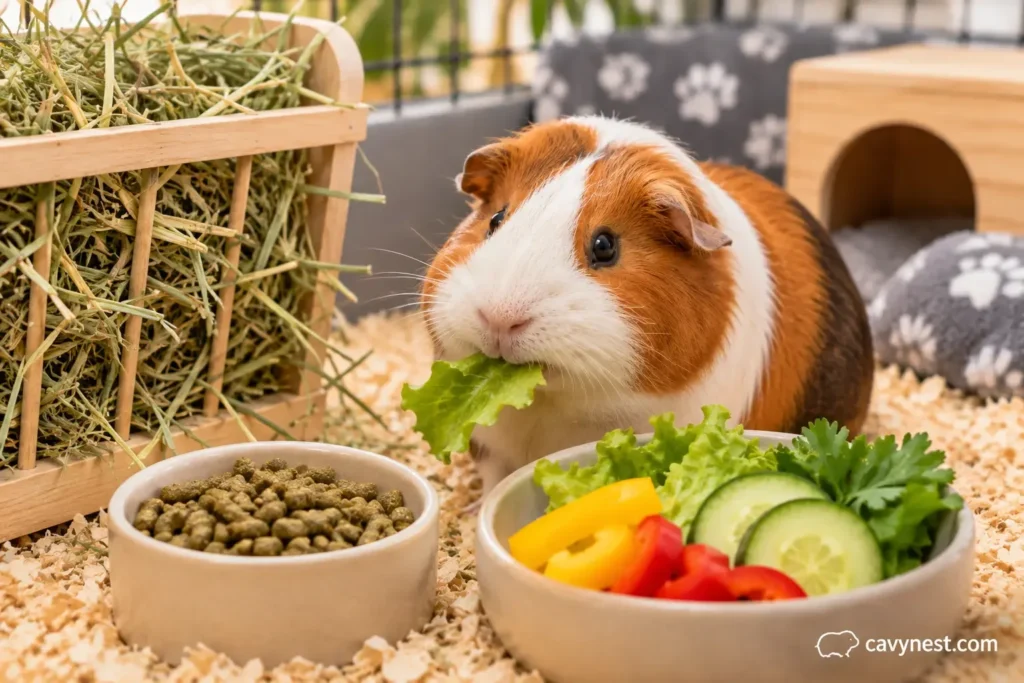
Guinea pigs cannot manufacture vitamin C. Feed a varied daily portion of safe greens and vegetables including a suitable vitamin-C source such as bell pepper. PDSA commonly suggests about one cup of vegetables per guinea pig daily; individual needs differ. Offer a modest measured quantity of plain species-specific pellets, not colorful seed mixes or rabbit food. Pellets lose vitamin C as they age, so check freshness and storage.
Water and changes in appetite
Provide fresh water constantly and check bottle nozzles or bowls daily. Do not routinely put vitamin drops into drinking water because palatability and stability are concerns. Change foods gradually. If hay intake drops, droppings shrink, the animal drools or it stops eating, seek a veterinarian promptly; do not wait to see whether treats solve the problem.
Daily care, cleaning and safe handling
A sustainable daily routine
Morning: check each animal is eating, moving and producing normal droppings; refresh water, hay and fresh food. Evening: remove wet spots, replace soiled bedding, note unusual behaviour and verify hay remains accessible. Weekly: clean deeper, inspect feet and nails, weigh each animal and record the trend. Cleaning frequency depends on the number of animals and enclosure design.
Help them trust people
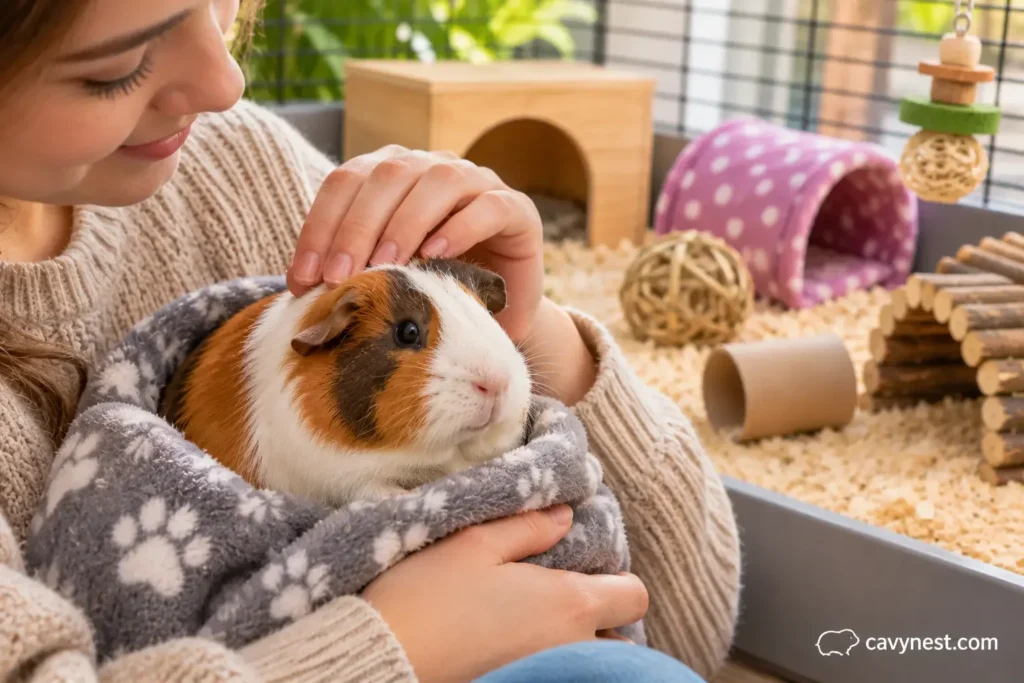
Start by sitting beside the enclosure and offering a small appropriate vegetable at floor level. Let the animal approach on its own terms. When lifting is necessary, support the chest and hindquarters, keep the guinea pig close to your body and low to the floor, and never place it on its back. Supervise children, who should preferably interact while the guinea pig stays on the floor.
Enrichment without gimmicks
Offer clean tunnels, paper bags with handles removed, safe cardboard hides, hay scattered in several stations and supervised exercise in a secure pen. Rotate objects for novelty while preserving familiar refuges. Exercise balls and wheels are inappropriate: guinea pigs are not built to bend or run in them. Never use harnesses to force outdoor walks.
Beginner equipment choices compared
What is worth buying
Choose objects by floor safety, ventilation, cleanability and whether a second animal can access them. A complex cage is not automatically better than a simple roomy layout. Evaluate the entire footprint after hides, bowls and tunnels are installed; animals still need open space to run.
| Choice | Helpful option | Avoid or reconsider |
|---|---|---|
| Housing | Large ventilated enclosure, solid floor | Small tall cage, wire flooring, aquarium |
| Bedding | Absorbent paper or maintained fleece | Wet bedding, loose strings, aromatic shavings |
| Food | Unlimited grass hay; vegetables and measured pellets | Seed mixes, treats instead of hay |
| Play | Tunnels, hides, secure floor pen | Exercise balls, wheels, risky heights |
How to recognize health problems early
Know the normal baseline
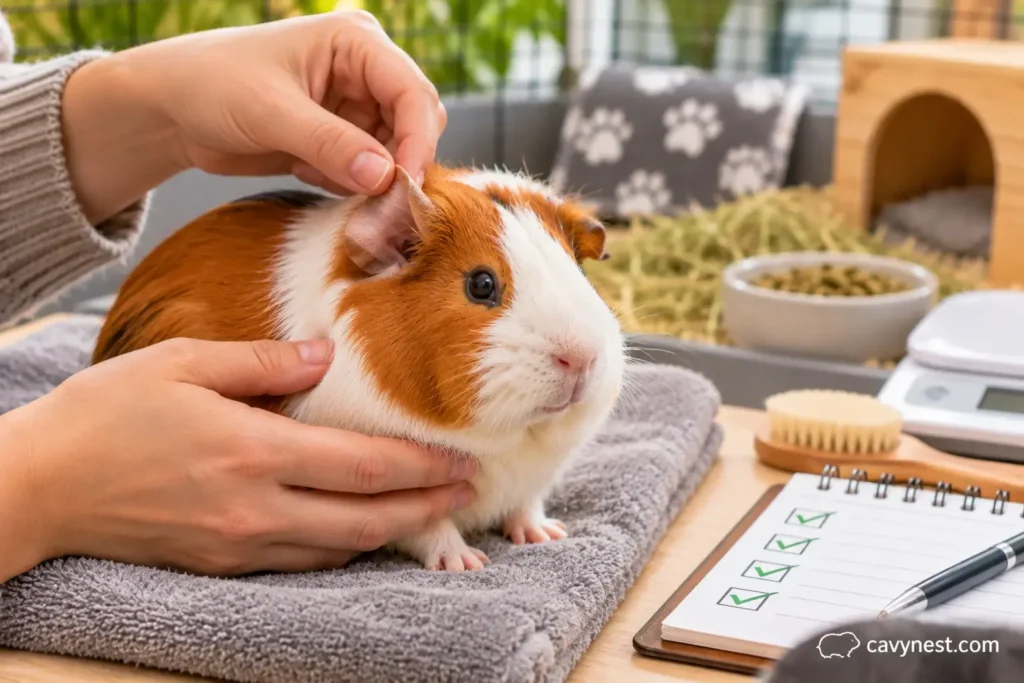
Learn each guinea pig’s normal appetite, droppings, activity, posture and weight. A weekly weight record can reveal a downward trend that is not visually obvious. Look for a clean nose, eyes, coat, feet and rear end. Check claws regularly and ask a veterinarian to show safe trimming; tooth trimming belongs to a veterinarian.
finding a guinea pig veterinarian.
Do not wait when eating or breathing changes
Not eating, much fewer droppings, severe lethargy, laboured breathing, persistent diarrhoea, a swollen belly, blood, significant pain or sudden weakness warrants urgent veterinary assessment. Guinea pigs hide illness, and gut or dental problems can deteriorate quickly. Do not give human painkillers, leftover antibiotics or unprescribed parasite products.
Find a veterinarian before adoption
Ask whether the clinic regularly examines guinea pigs and can evaluate dental disease, digestive concerns, and emergency presentations. Confirm hours and after-hours referrals. Transport guinea pigs securely with hay and familiar-smelling bedding; keep bonded companions together when practical and safe.
Common beginner mistakes and safer alternatives
Buying one guinea pig or choosing a tiny cage
A guinea pig cannot get species-specific companionship from people alone. Where introductions are difficult, seek rescue or behaviour-informed advice rather than abandoning the social goal. More space, multiple refuges and separate resources can reduce tension but do not guarantee compatibility.
Using pellets as the main food
A full bowl of pellets is not a replacement for constant hay. It may displace chewing and fibre intake, and mixes can encourage selective feeding. Treat vegetables as nutritional variety, not an excuse to skip the hay supply.
Mistaking quietness for being healthy
A motionless guinea pig may be frightened or ill, not necessarily relaxed. Watch for changes from its usual behaviour, and take weight loss, reduced appetite and abnormal stool seriously. Ask a professional early rather than diagnosing from online photos.
Final verdict: a realistic first-week checklist
Build habits before buying accessories
The strongest beginner setup is not the most decorated cage. It is a safe social group, ample floor space, consistent high-fibre food, daily observation and a medical plan. During the first week, prioritize familiar diet, calm interactions and written notes about eating and waste; expand enrichment as confidence grows.
For a sustainable routine, guinea pig care for beginners means checking the animals as carefully as the equipment.
Frequently asked questions
Can a guinea pig live alone?
Guinea pigs should ordinarily live with compatible guinea pig companions because they are highly social. Ask a rescue for help with safe bonding when pairing is difficult.
What should a beginner buy first?
Buy a spacious solid-floor enclosure, suitable bedding, multiple hides, hay, fresh-water equipment and guinea-pig-specific pellets before bringing animals home.
How much hay should guinea pigs eat?
Guinea pigs need unrestricted access to good-quality grass hay around the clock. Replace soiled hay and monitor whether each animal is actually eating it.
Do guinea pigs need vitamin C every day?
Yes. Guinea pigs cannot make their own vitamin C, so provide reliable dietary sources daily and discuss supplements with a veterinarian when needed.
How often should a cage be cleaned?
Remove wet and dirty spots daily and thoroughly clean as needed, often at least weekly. A crowded enclosure or damp bedding requires more frequent work.
Can guinea pigs live with rabbits?
No. Rabbits are not appropriate cagemates because of different behaviours and diets, injury risk and possible disease transmission.
Do guinea pigs enjoy being picked up?
Many guinea pigs find lifting stressful, especially at first. Use slow positive interactions and support the entire body whenever handling is necessary.
What if my guinea pig stops eating?
Contact an experienced veterinarian urgently if your guinea pig stops eating or produces markedly fewer droppings. Waiting can be dangerous.
How long do guinea pigs live?
Many guinea pigs live roughly four to eight years, though individuals vary. Plan for long-term veterinary and daily-care responsibilities.
Veterinary and welfare sources
These veterinary and welfare resources support the housing, nutrition, handling and illness guidance above.