
For most guinea pigs, unscented low-dust recycled paper bedding or a purpose-made fleece liner over an absorbent layer are practical choices. Keep the floor soft and dry, remove wet patches daily, and avoid cedar, raw pine, sawdust, fluffy cotton nesting material and clumping cat litter. No bedding compensates for poor ventilation or infrequent cleaning.
Quick answer
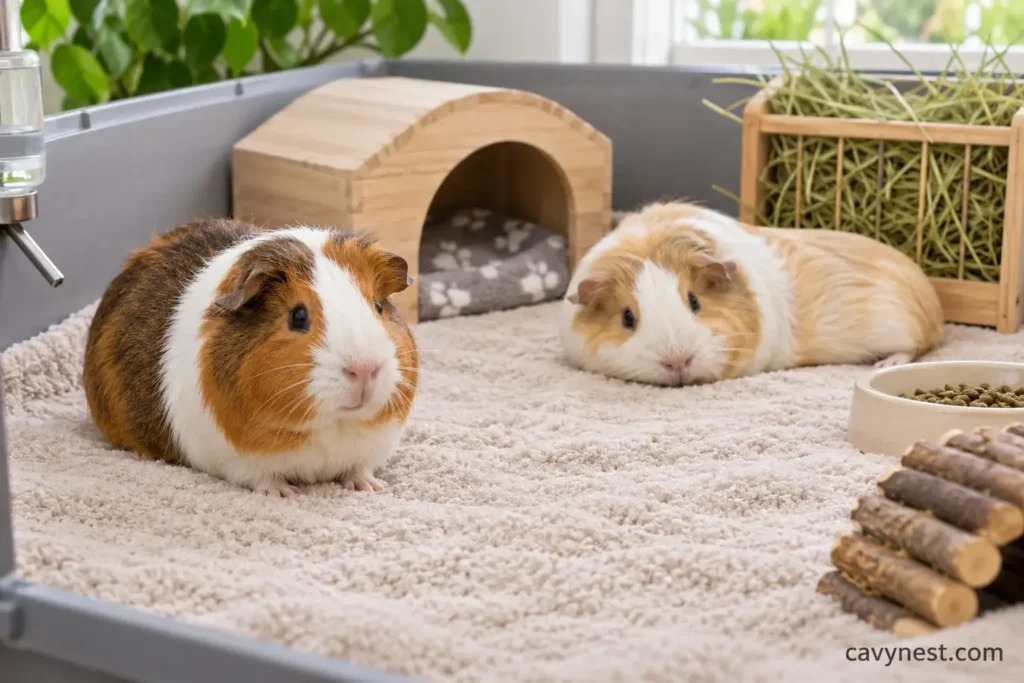
For most guinea pigs, unscented low-dust recycled paper bedding or a purpose-made fleece liner over an absorbent layer are practical choices. Keep the floor soft and dry, remove wet patches daily, and avoid cedar, raw pine, sawdust, fluffy cotton nesting material and clumping cat litter. No bedding compensates for poor ventilation or infrequent cleaning.
Quick picks
- Most straightforward starter choice: unscented, low-dust paper bedding in an adequate layer.
- Reusable option: fleece made for guinea pigs, with a protected absorbent backing and regular washing.
- For selected experienced setups: low-dust, non-aromatic aspen or hemp where the product is suitable and your veterinarian agrees.
What makes guinea pig bedding safe?
The best floor covering is not simply the softest material in the shop. Guinea pigs live close to the floor, rest on it, and often soil the same areas where they eat. A suitable covering therefore must cushion their feet, absorb or move urine away from the surface, produce little dust and be easy to replace before it stays damp. Strong perfume is not a hygiene feature.
Solid floors matter: bare wire grids can injure feet even when a cage is otherwise large. Keep hides and hay areas comfortable, and never use a layer of bedding to justify an undersized enclosure.
A useful bedding choice should also fit the rest of the habitat. See our guides to appropriate cage floor space and timothy hay feeding guide. A clean floor is especially important when an animal has a health concern; use our advice on finding a guinea pig veterinarian.
Guinea pig bedding options compared
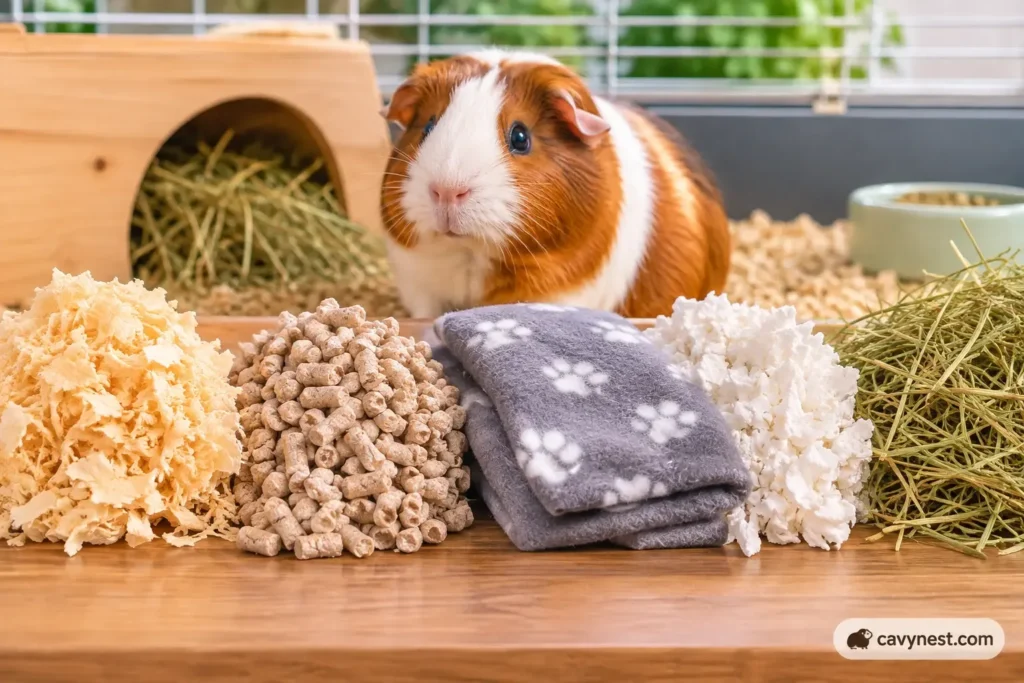
Paper bedding is a sensible default because it is typically soft and absorbent when properly chosen. Look for unperfumed, low-dust recycled paper marketed for small animals, not scented decorative confetti. Avoid assuming every paper product is identical; inspect it for sharp scraps, dampness, and dusty fines.
Fleece is a washable system rather than a single piece of cloth. It needs a moisture-wicking surface over an absorbent layer, otherwise urine can remain against the feet. A visibly wet fleece liner is not working adequately, regardless of its price. Aspen and hemp may be appropriate in some setups, but check dust, sharp fragments, availability and individual sensitivity. Guidance differs on wood products, so paper is the simpler conservative choice.
Bedding comparison at a glance
| Material | Potential benefit | Main limitation | Practical verdict |
|---|---|---|---|
| Unscented recycled paper | Easy spot replacement; soft when adequately deep | Ongoing purchases; may scatter | Strong beginner default |
| Purpose-made fleece liner | Reusable; easy to observe droppings | Needs absorbent backing and frequent washing | Good for attentive keepers |
| Low-dust aspen / suitable hemp | Loose-substrate option in some guidance | Check dust, chips and individual reaction | Conditional alternative |
| Cedar, raw pine, sawdust | No welfare advantage that offsets risk | Aromatic oils, dust or irritation | Avoid |
| Clumping litter / fluffy cotton | Not appropriate | Ingestion, tangling and other hazards | Avoid |
How to build a dry fleece bedding system
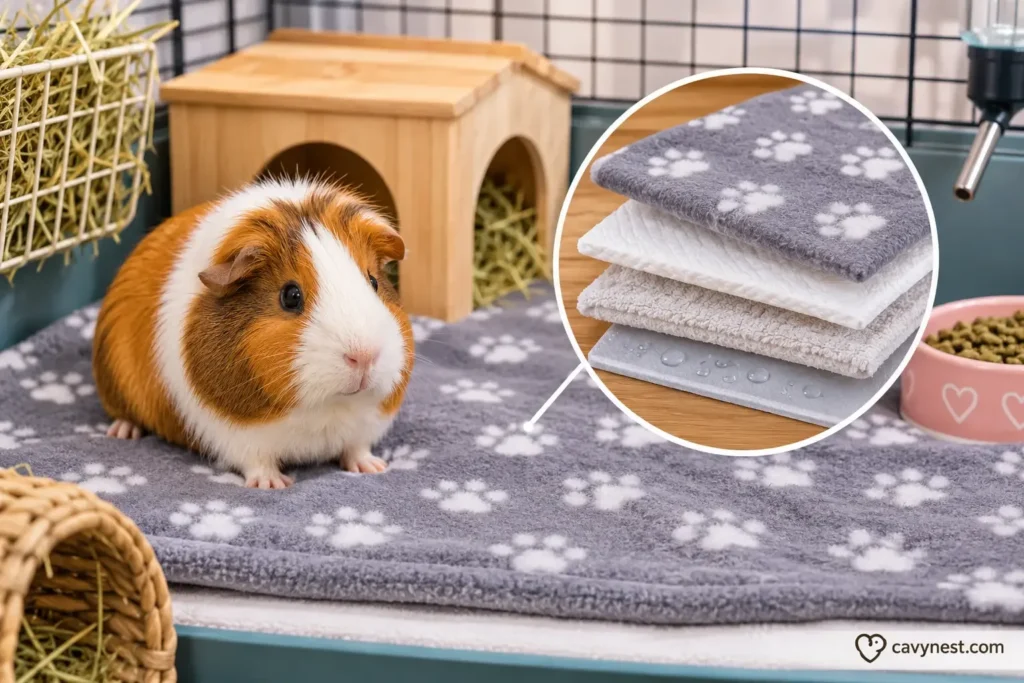
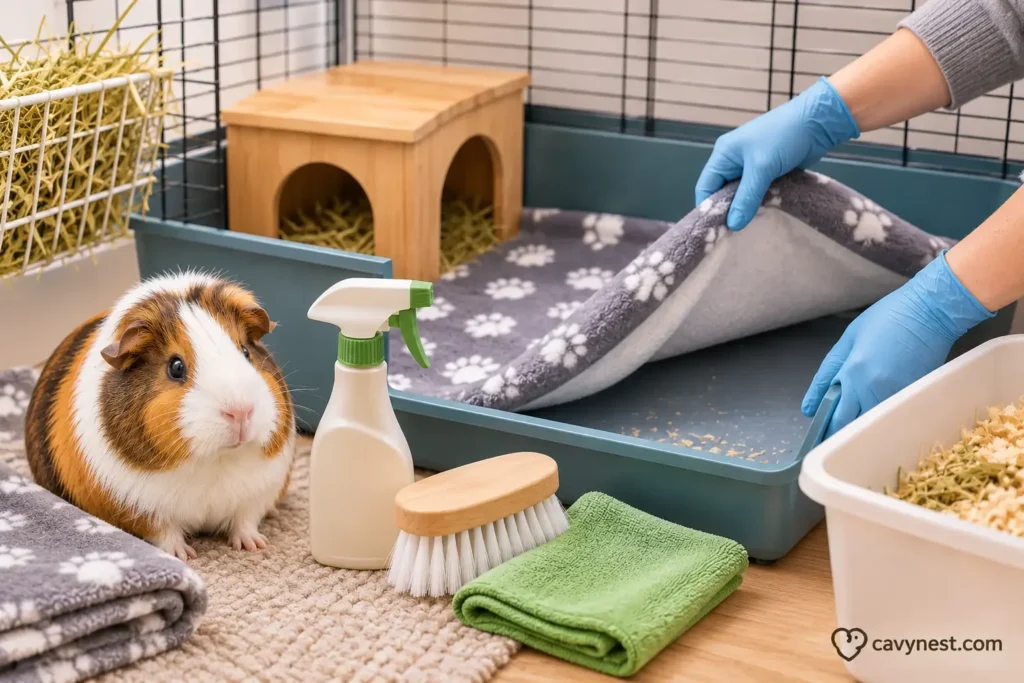
Use a purpose-made guinea pig liner or tightly secured, intact fleece above a washable absorbent layer. Follow the liner maker’s care directions, avoid fabric softener that interferes with wicking, and test whether a small amount of water passes through the surface rather than pooling. No loose loops, frayed seams or accessible absorbent pads should be left within reach.
Place additional removable pads in the areas where guinea pigs routinely urinate, often near hay and shelters. Inspect those spots every day. Replace or wash the entire liner whenever dampness or odor persists; there is no universal safe number of days.
Bedding materials to avoid and why
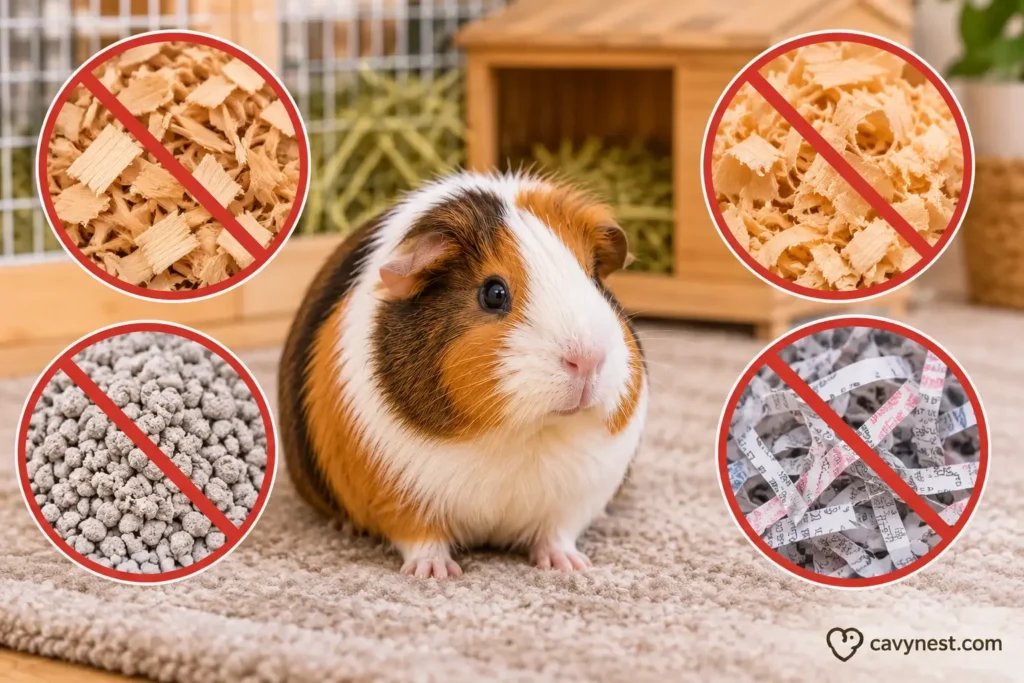
Avoid cedar and strongly aromatic or untreated pine products, because volatile compounds and dust can irritate the respiratory tract. Avoid fine sawdust and heavily dusty products. Cotton wool, fluffy nesting fibers and fraying fabric can wrap around limbs or be swallowed; clumping cat litter and corn-cob products create additional ingestion or hygiene hazards.
Straw is not equivalent to soft eating hay: coarse stalks may poke eyes and provide poor absorbency. Fresh grass hay is essential food and useful enrichment, but a wet pile of hay should not serve as a permanent urine-soaked mattress. Remove soiled hay frequently.
Cleaning schedule that follows the cage, not the calendar
Check the floor each morning and evening, especially around water bottles, feeding stations and hides. Remove wet paper bedding immediately and replace that portion with fresh material. On fleece, shake away droppings, remove soggy inserts and launder soiled liners. Never return animals to a wet floor or a cage with cleaner residue.
A full clean is needed when the substrate has absorbed urine, smells strongly or no longer stays dry, even if that is sooner than a printed weekly schedule. During cleaning, move guinea pigs to a safe supervised pen with hay and shelter; dry the enclosure fully before returning them.
Common mistakes and useful adjustments
A thin decorative fleece blanket placed on plastic may look tidy but traps moisture. Overfilling the cage with loose bedding can hide wet corners rather than solve them. Replacing perfume with better ventilation and prompt spot cleaning is more effective than masking urine odor.
Keep a second clean liner or paper supply ready so cleaning is never delayed. If one pig repeatedly chews a liner or shreds it into strands, remove the unsafe item and try a safer alternative. If feet become sore, skin becomes red, or breathing changes, contact an experienced guinea pig veterinarian promptly.
Bedding is part of housing, not a replacement for nutritional care. Keep fresh hay available and review the daily guinea pig diet and safe and unsafe guinea pig foods.
Final verdict: which bedding should you choose?
For a new keeper, low-dust, unscented paper bedding is the easiest baseline to inspect and replace. For a household willing to spot-clean and launder frequently, a properly assembled fleece system can work well. Avoid strong-smelling wood products, sawdust and loose synthetic nesting fibers regardless of budget.
Choose the setup that stays dry under your guinea pigs’ actual habits, not the one that looks clean in a photograph. Review cage size, hiding places, hay provision and veterinary access as parts of the same welfare plan.
Frequently asked questions
What is the best bedding for guinea pigs?
Unscented, low-dust paper bedding is a practical first choice, while properly layered fleece is another suitable option with frequent cleaning.
Is fleece bedding safe for guinea pigs?
Yes, fleece can be suitable when it stays dry on top, has an absorbent layer underneath and contains no accessible loose fibers.
Can guinea pigs use pine shavings?
Avoid raw or strongly aromatic pine; some guidance permits kiln-dried pine, but paper or suitable fleece avoids this disagreement.
Are cedar shavings safe for guinea pigs?
No, cedar bedding should be avoided because its aromatic oils can irritate sensitive airways.
Can I use newspaper by itself?
A thin sheet of newspaper alone is generally not enough cushioning or absorption; use suitable absorbent bedding above a solid floor.
How often should I change guinea pig bedding?
Remove wet and heavily soiled areas every day and replace the whole layer or liner whenever it no longer stays dry and clean.
Can hay be used as bedding?
Soft, clean grass hay may be used in resting areas, but soiled hay must be removed; fresh hay must also remain available as food.
Is cat litter safe for guinea pigs?
No, particularly clumping or clay cat litter is unsuitable because of dust and ingestion hazards.
Why does my guinea pig cage smell so quickly?
Persistent odor usually means urine is accumulating in bedding or hidden corners; inspect water leaks, absorbency and cleaning frequency.
What if my guinea pig has red or painful feet?
Arrange prompt assessment by a guinea pig-experienced veterinarian and immediately provide a clean, dry, cushioned solid floor.