
Guinea pig breeds differ mainly in coat length, texture and rosettes—not in their basic needs for companionship, hay, space and veterinary care. This guide to guinea pig breeds uses visual comparisons and image placeholders to explain American, Abyssinian, Teddy, Rex, Peruvian, Silkie, Texel and other varieties. No photograph alone proves pedigree.
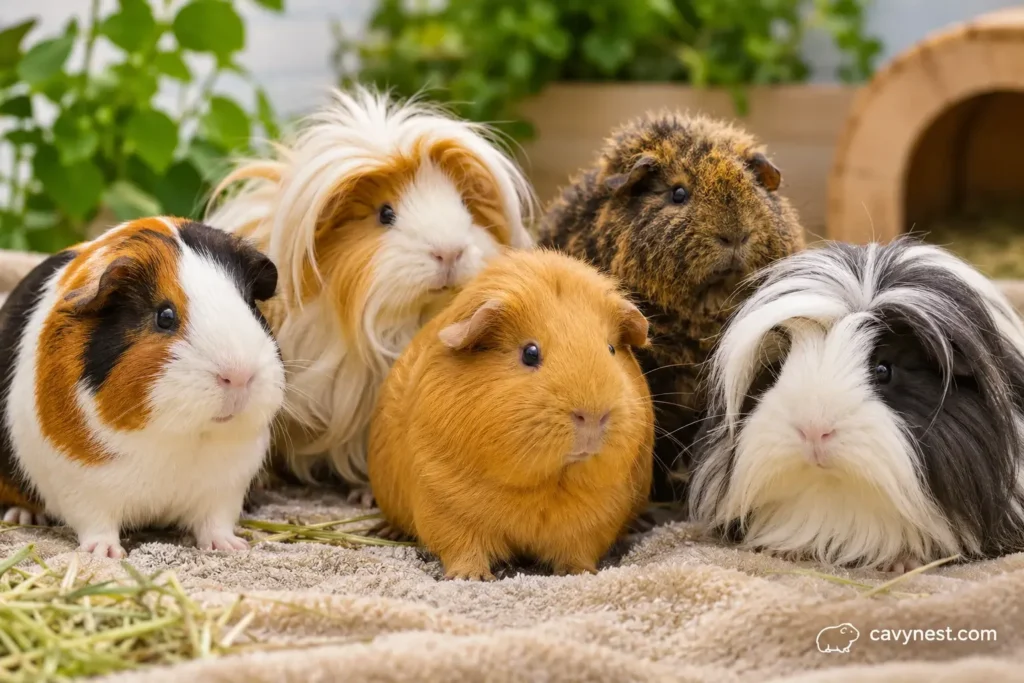
Quick picks for common care needs
- Easiest coat routine: a healthy smooth-coated American or similar short-haired guinea pig.
- Distinctive rosettes: Abyssinian, whose coat grows in multiple directions.
- Plush texture: Teddy or Rex; standards differ and they should not be confused.
- High-maintenance coats: Peruvian, Silkie, Coronet and Texel require frequent hands-on care.
Understanding guinea pig breeds
A breed is a defined collection of coat and physical traits under a particular registry, not a reliable personality label. The American Cavy Breeders Association currently presents 13 US exhibition breeds, including satin variants. The British Cavy Council uses a broader range of named varieties and standards. Therefore there is no universally valid total for every country. Shelter guinea pigs may have mixed ancestry and still be excellent companions.
Start with coat appearance, then ask about grooming requirements and health. Colour names such as agouti, Dutch marking or tortoiseshell do not always designate separate breeds in every registry.
Breed labels differ between clubs because an exhibition standard is a convention adopted by an organization. Animals without registration papers are not automatically unhealthy. When you see a breed claim in a listing, ask which association and standard it uses rather than assuming a global definition.
Source and further details: American Cavy Breeders Association.
Guinea pig breeds at a glance
Use the comparison as a recognition aid, not proof of registration. A photograph can show a curl or crest, but cannot establish lineage, health or a show-standard classification.
| Breed or type | Visible coat | Grooming implication |
|---|---|---|
| American / smooth | Short, flat | Low detangling |
| White Crested | Short with forehead crest | Low detangling |
| Abyssinian | Short with multiple rosettes | Inspect hair direction and skin |
| Teddy / Rex | Short, dense, upright | Gentle regular checks |
| Peruvian | Long, may grow forward | Daily grooming |
| Silkie / Sheltie | Long, smooth, backwards | Daily grooming |
| Coronet | Long with frontal crest | Daily grooming |
| Texel | Long curly coat | Daily mat checks |
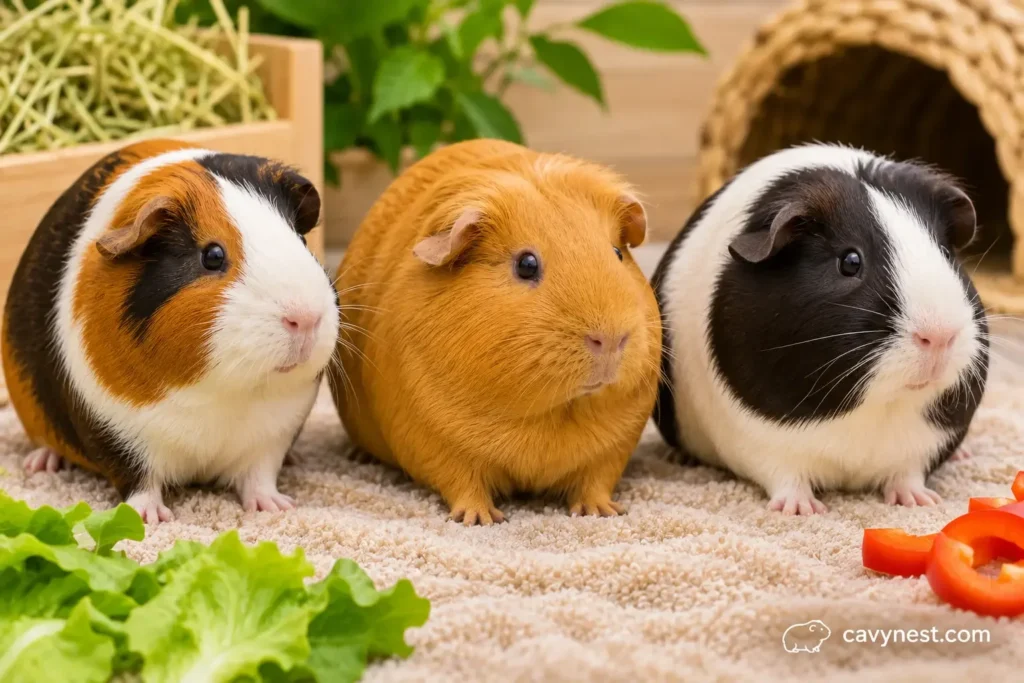
The most useful first question is how the coat grows: flat, rosetted, upright, long straight or long curled.
Smooth-coated and crested guinea pigs
The American is a short, smooth-coated breed with a relatively uncomplicated hair routine. White Crested guinea pigs have a contrasting crest on the forehead; British terminology can distinguish English Crested and other crested forms. A crest is an appearance feature, not evidence of a calmer temperament.
For first-time caregivers, a short coat reduces detangling work but never removes the need for nail care, skin inspection, clean bedding or appropriate handling.
For a good photograph, show the entire animal at its usual coat length, with its forehead and back visible. Avoid handling that forces the animal into a pose. Lighting and grooming can change apparent texture; notes about what the hair feels like are not a substitute for professional breed assessment.
Abyssinian, Teddy and Rex: textured coats
Abyssinian guinea pigs have rosettes that create visible ridges and changes in hair direction. Teddy coats stand up and feel plush; the British Cavy Council describes a distinct forward coat orientation and short, dense hair. Rex guinea pigs also have an upright, crimped coat, but the Rex and Teddy have separate breed standards. Coat feel from a picture is an unreliable way to separate them.
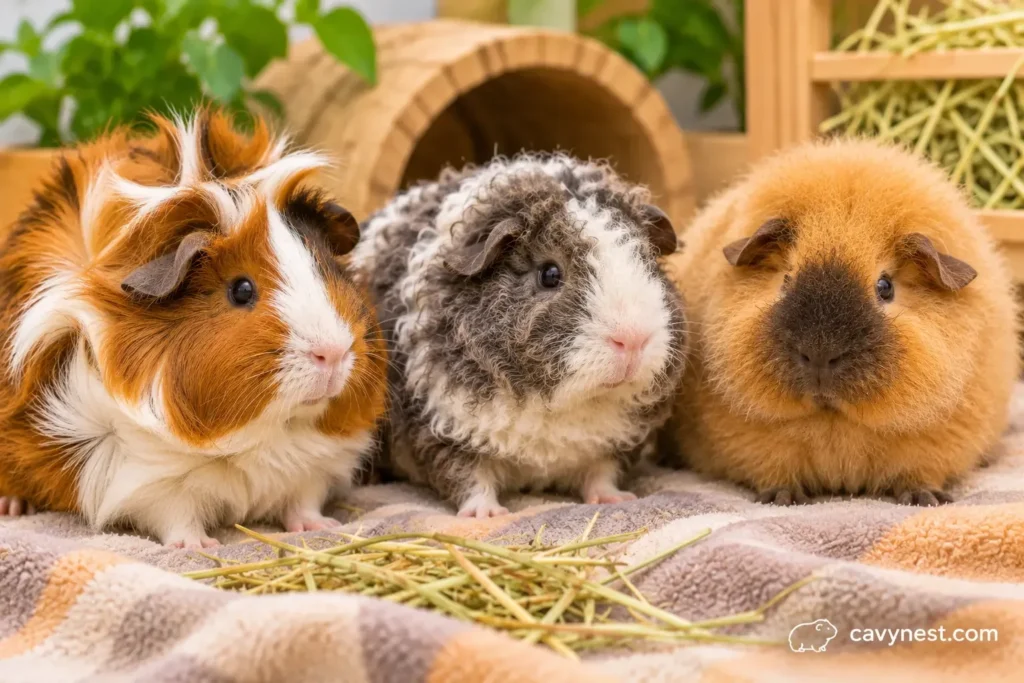
Look at the entire animal and its documented background. Parting, itching, bald areas or crusts are not normal breed identifiers and should prompt a veterinary assessment.
Source and further details: British Cavy Council breed standards.
Long-haired breeds: Peruvian, Silkie, Coronet and Texel
Peruvians have long hair that can fall forward from their rosettes, while Silkies—also called Shelties in British usage—have a long smooth coat directed back from the head. Coronets add a forehead crest to a long coat. Texels have long curls; other national standards include Merino, Alpaca and Lunkarya. All long coats require observation for dampness, mats and soiling.
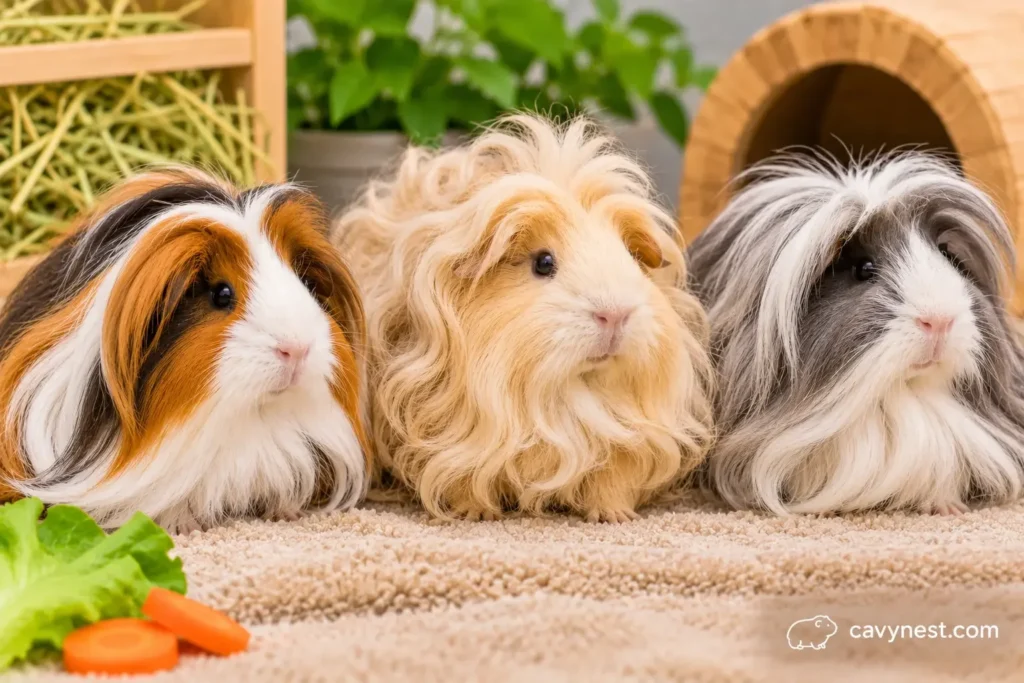
The RSPCA advises daily grooming for long-haired guinea pigs. Practical pet trims can reduce dragging hair. Never pull tight mats from fragile skin or use scissors close to the body without professional guidance.
Grooming is not just for appearance. Checking under the chin, around the rump and between the legs can reveal hidden mats or soiling, especially in long coats. Keep sessions short and calm, support the body securely, and stop if the animal struggles.
Source and further details: RSPCA guinea pig health and grooming.
Satin, hairless and other coat descriptions
Satin describes a distinctive glossy hair quality and appears as separate recognized variants in some American breed lists. It is not simply a colour. Hairless guinea pigs, often called Skinny pigs, fall outside the listed ACBA exhibition breeds and need particular attention to skin condition, ambient comfort and injury prevention. Claims that any look is automatically healthier are unjustified.
A label such as “mini”, “rare” or “hypoallergenic” should never replace a health check or sound welfare information. Hairless animals are not guaranteed to be allergy-safe.
How to choose a breed for your household
Choose guinea pigs by the welfare needs you can meet, not by the assumption that one breed is always friendly. Temperament varies among individuals and is affected by handling, stress, socialization and surroundings. Plan suitable same-species companionship and ask a rescue or knowledgeable veterinarian about introductions and sex confirmation.
For beginners, a healthy short-haired bonded pair is often more manageable than two animals requiring daily coat trimming. Experienced keepers may enjoy long coats only when they can commit to gentle daily maintenance.
When comparing guinea pig breeds, revisit daily grooming time and compatibility rather than relying on looks.
A thoughtful adoption decision considers two guinea pigs’ social compatibility and a suitable enclosure before coat colour. Ask for a description of daily care, their regular foods and any past health concerns; arrange veterinary assessment when needed.
Grooming and health across all coat types
Every guinea pig requires unlimited suitable grass hay, fresh water, an appropriate guinea pig diet with vitamin C, enough usable floor space, hiding areas and routine inspection. The Merck Veterinary Manual confirms the dietary vitamin C requirement and describes regular nail and coat care. Long hair creates extra hygiene work, not a separate diet.
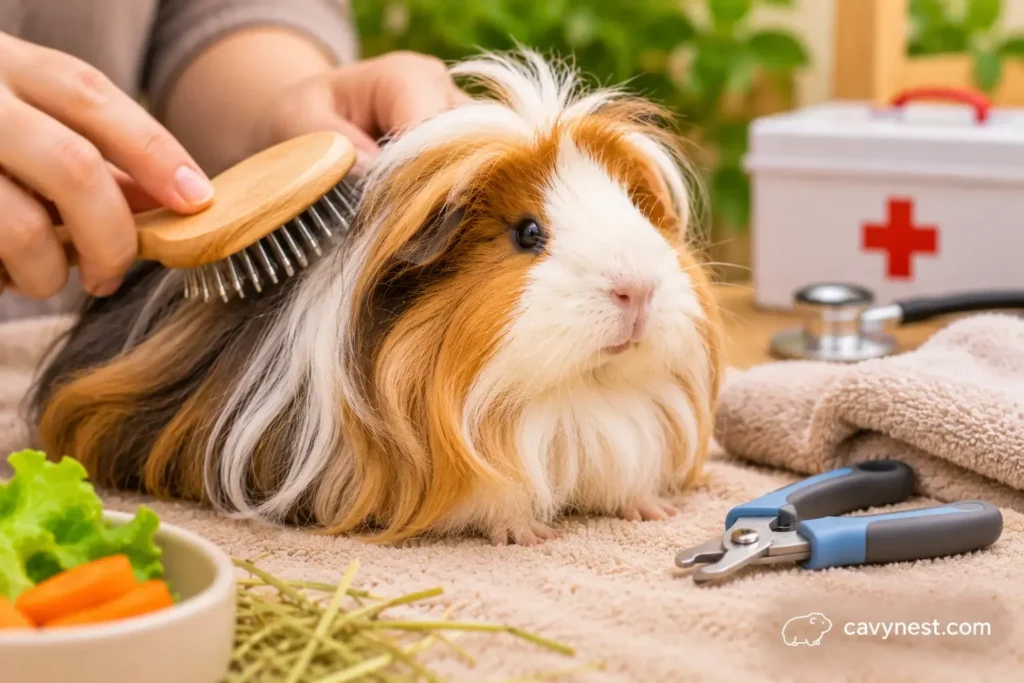
Observe appetite, feces, movement, breathing and posture daily. A guinea pig that stops eating, passes few droppings or shows breathing difficulty needs prompt veterinary advice; do not assume signs are normal for its breed.
Source and further details: Merck Veterinary Manual nutrition.
Common breed-identification mistakes
One common mistake is treating fur colour as a breed. Another is identifying Rex versus Teddy only by an online picture. A third is assuming a longer coat means a more affectionate animal. Show-standard names and pet-trade labels may differ between countries; mixed-breed animals need not fit any single standard.
Avoid choosing a guinea pig solely from an appealing photograph. Observe its condition and ask about social compatibility, previous diet, coat care, age estimate and access to guinea-pig-experienced veterinary help.
finding an experienced guinea pig vet
Final verdict: welfare before appearance
The best guinea pig breed is not a fixed winner. A manageable coat and a compatible, healthy companion matter more than an exhibition label. Photos make the visual differences easier to understand, but they never establish genetics or health on their own.
If grooming time is limited, favour a short coat. If you choose Peruvian, Silkie, Coronet or Texel, commit to daily coat checks and gentle grooming. In every case, prioritize companionship, shelter, correct nutrition and veterinary access.
Frequently asked questions
How many guinea pig breeds are there?
The American Cavy Breeders Association lists 13 exhibition breeds; counts differ across registries and countries.
Which guinea pig breed is easiest for beginners?
A healthy short-haired American or similarly smooth-coated guinea pig usually needs less coat maintenance than long-haired varieties.
Are Abyssinian guinea pigs aggressive?
No breed can reliably be labelled aggressive; an individual guinea pig’s behaviour depends on many factors.
What is the difference between Teddy and Rex guinea pigs?
Both have short upright coats, but their coat structure and breed standards differ; a photo alone may not settle identification.
Do long-haired guinea pigs need daily brushing?
Yes, long-haired guinea pigs generally need daily grooming and checks for knots, moisture and soiling.
Is a Skinny pig a recognized ACBA breed?
No, Skinny pigs are not among the 13 breeds listed by the American Cavy Breeders Association.
Can guinea pigs of different breeds live together?
Yes, compatible guinea pigs of different breeds can live together when introductions, sex and housing are managed appropriately.
Does coat colour tell you the breed?
No, many colours and patterns occur within several breeds, so colour alone is insufficient.
Are satin guinea pigs healthier than other guinea pigs?
No general health advantage follows from a satin coat; evaluate the individual animal and seek veterinary guidance about any concerns.
Can breed photographs confirm a pedigree?
No, photographs can suggest a coat type but documented breeding records are needed to support a pedigree claim.