
Quick answer
An overweight guinea pig is identified by body condition, not a universal number on the scale. If ribs and spine are difficult to feel beneath soft tissue, the waist is reduced and weight is rising, arrange a veterinary assessment. Never withhold hay or begin a crash diet; check appetite, droppings and mobility every day.
An overweight guinea pig may feel unusually padded over the ribs and spine, have little visible waist from above and find grooming or moving less comfortable. A round silhouette or a single scale reading cannot diagnose obesity. Use gentle body-condition checks, regular weight records and a guinea-pig-experienced veterinarian to distinguish excess fat from normal build, pregnancy or illness.
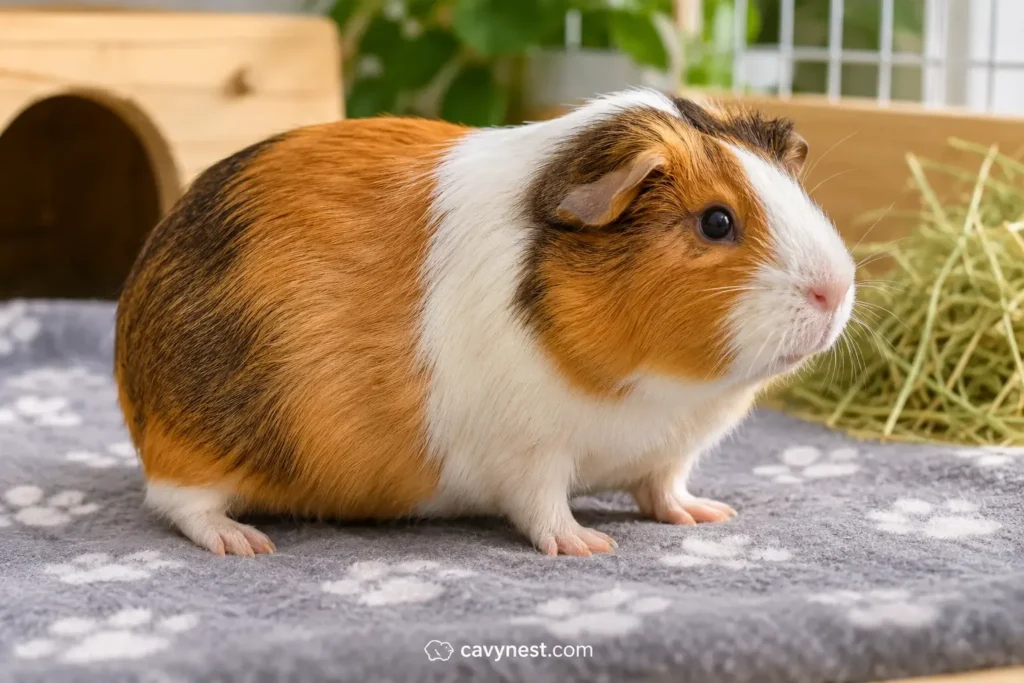
At a glance
- Best first check: feel gently along the ribs, backbone and pelvis rather than judging a photograph.
- Best trend check: use the same gram scale once a week and record the readings.
- Best diet correction: keep grass hay unlimited and discuss measured pellets and treats with your vet.
What an overweight guinea pig actually looks and feels like
A healthy guinea pig is naturally compact, broad through the rear and often pear shaped. Fur thickness, posture, pregnancy and individual frame size can make one animal look larger than another. Fat assessment works better when you combine a top-down view with gentle palpation.
Place your guinea pig on a secure nonslip surface, support the body and slide your fingers lightly over the rib cage, spine and hip region. In moderate condition, bones are discernible beneath a thin tissue covering without being pointed. If you must press firmly to locate them, excess fat is possible, but a veterinarian should assess muscle and health too.
A guinea pig can look pear-shaped even in good condition. This is why the five-point scale is more helpful than a photograph alone; no owner should try to classify a pet by squeezing or pulling at the skin.
Some guinea pigs have naturally prominent neck folds. Their presence alone is not a reliable sign of obesity. Check the whole body and the animal’s movement.
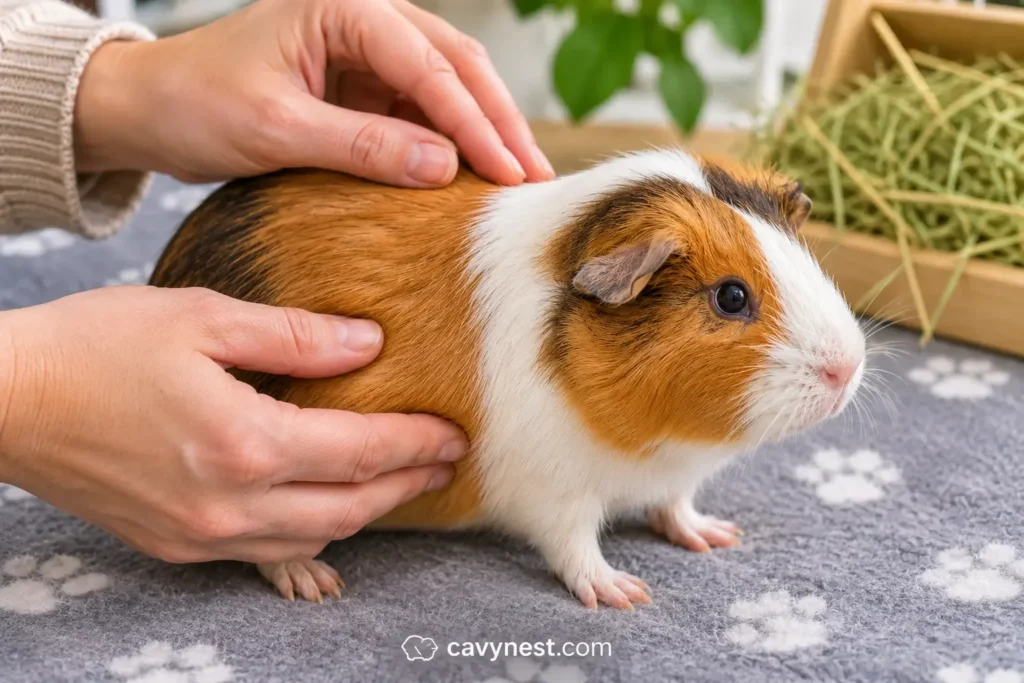
Overweight guinea pig body-condition checks
A five-point body-condition scale describes how easy it is to feel bones and whether the waist is present. It is a clinical guide rather than a substitute for an examination. The NSW Department of Primary Industries describes score 3 as ideal and score 4 as overweight; body condition should be interpreted alongside age, build and medical history.
Look from above while the animal stands normally rather than while it crouches into a ball. Compare the width of the shoulders and rear. A barely evident waist, substantial padding or difficulty reaching the rear for grooming warrants a closer check.
Body-condition scoring relies on both fat and muscle. Older animals may lose muscle while gaining fat, so a visually broad animal may still have an important medical problem.
If palpation is stressful, stop, allow the guinea pig to settle and have a professional demonstrate the technique.
Body condition comparison
| Condition | What you may feel | What it means |
|---|---|---|
| Lean | Prominent or sharply palpable bones | May indicate underconditioning or illness |
| Moderate | Bones easy to find with light coverage | Often consistent with appropriate condition |
| Overweight | Bones difficult to find under soft tissue | Veterinary body-condition assessment advised |
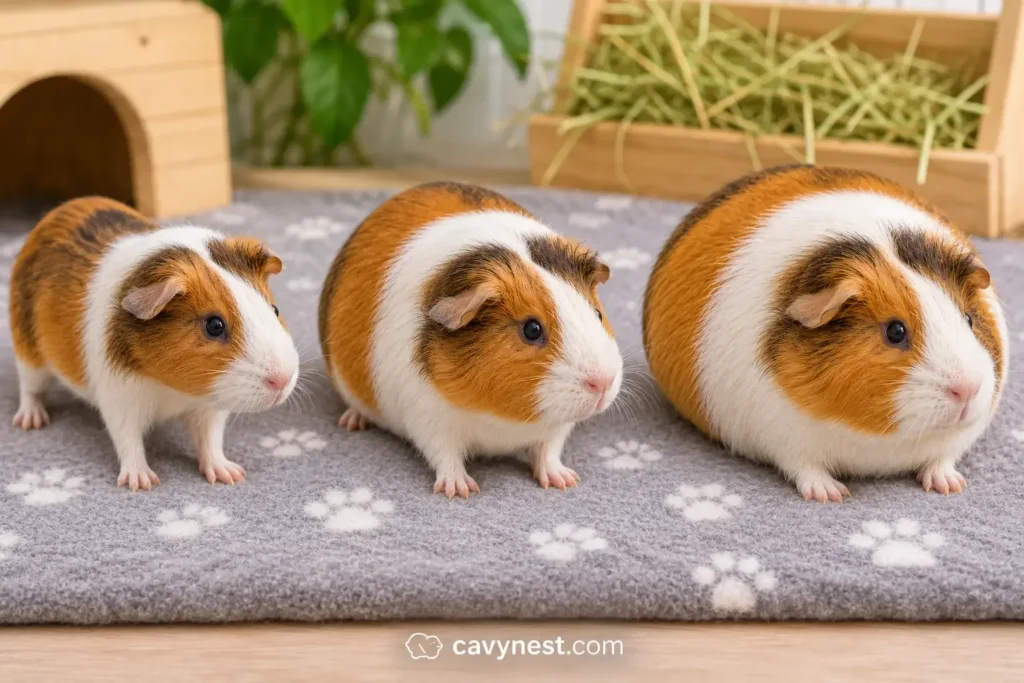
NSW Department of Primary Industries — Guinea Pigs Rehoming Guideline.
Weigh consistently, but do not use a rigid weight cutoff
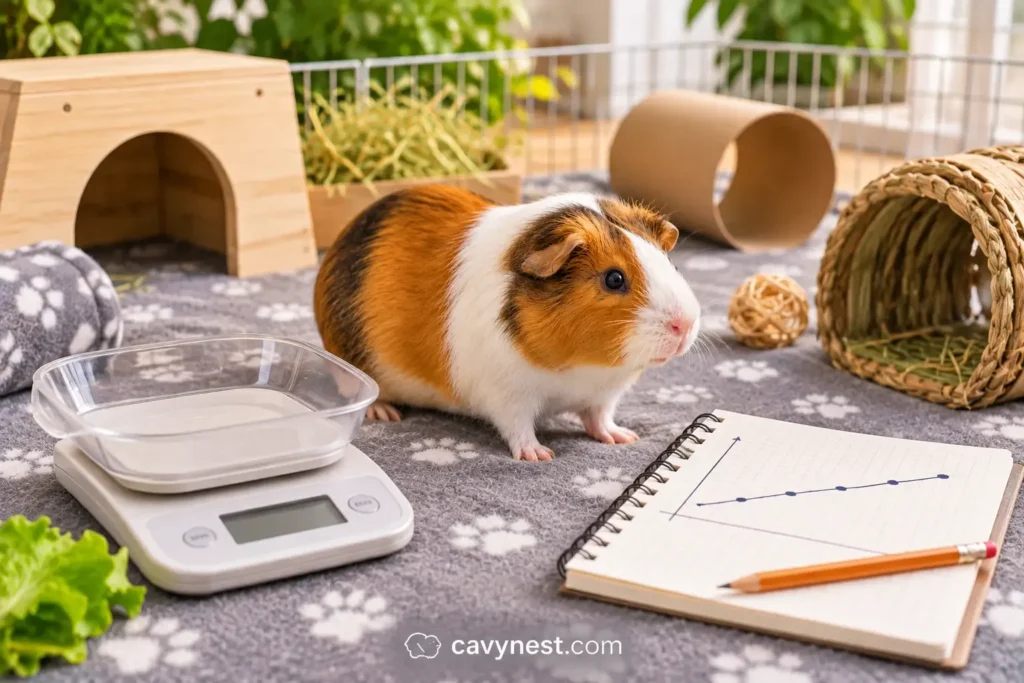
Use a stable digital kitchen scale that reads grams, a non-slip container and a calm routine. Tare the container, place the guinea pig safely inside and record date, weight, appetite and notable observations. Weighing weekly is a practical starting point; an ill animal may need veterinary-directed monitoring more often.
One weight number cannot label every guinea pig fat. Adult body size varies with sex, breed, genetics and muscle. A sudden increase can also reflect pregnancy, fluid or another illness, while rapid loss is a warning even in an animal that previously looked heavy.
Record weights in grams, not rounded kilograms, so a meaningful trend is visible. An ordinary kitchen scale may be used if stable and accurate; keep the animal from jumping off.
Compare the same animal with its earlier records, not with a companion that has a different body frame.
finding a guinea pig veterinarian.
Why guinea pigs gain excess fat
Too many energy-dense pellets, mixed feeds with seeds or sweet pieces, frequent fruit treats and little opportunity to move can contribute to unwanted weight gain. This does not prove that a particular pet is overfed; age, disease and mobility also matter.
The safest review starts with the actual food offered, not assumptions. Photograph labels and measure ordinary daily portions, including food supplied by other family members. Check whether hay remains accessible, fresh and appealing throughout the day.
A food diary reveals portion creep. A few extra spoonfuls of pellets from multiple caregivers may go unnoticed without a written record.
Choose plain pellets formulated for guinea pigs instead of colorful mixes. Check the package ingredients and ask your veterinarian about appropriate servings.
Feeding an overweight guinea pig safely
Unlimited good-quality grass hay is the foundation of an adult guinea pig diet. Hay supports normal gut movement and tooth wear. Offer appropriate daily vegetables, including vitamin-C-rich choices, and a measured amount of plain guinea pig pellets; exact amounts depend on the individual and product.
Do not remove hay, fast the animal, replace food with water or abruptly halve everything. Guinea pigs rely on ongoing fiber intake and can become dangerously unwell when they stop eating. The Merck Veterinary Manual and veterinary nutrition guidance support hay-first feeding and gradual changes.
Vitamin C remains indispensable even when calories are being managed. Bell pepper and suitable greens can contribute vitamin C; their nutritional balance and portions matter.
A high-fiber ration is not a starvation ration. Sudden reductions can disrupt normal feeding and gut function, so the goal is a stable, sustainable routine.
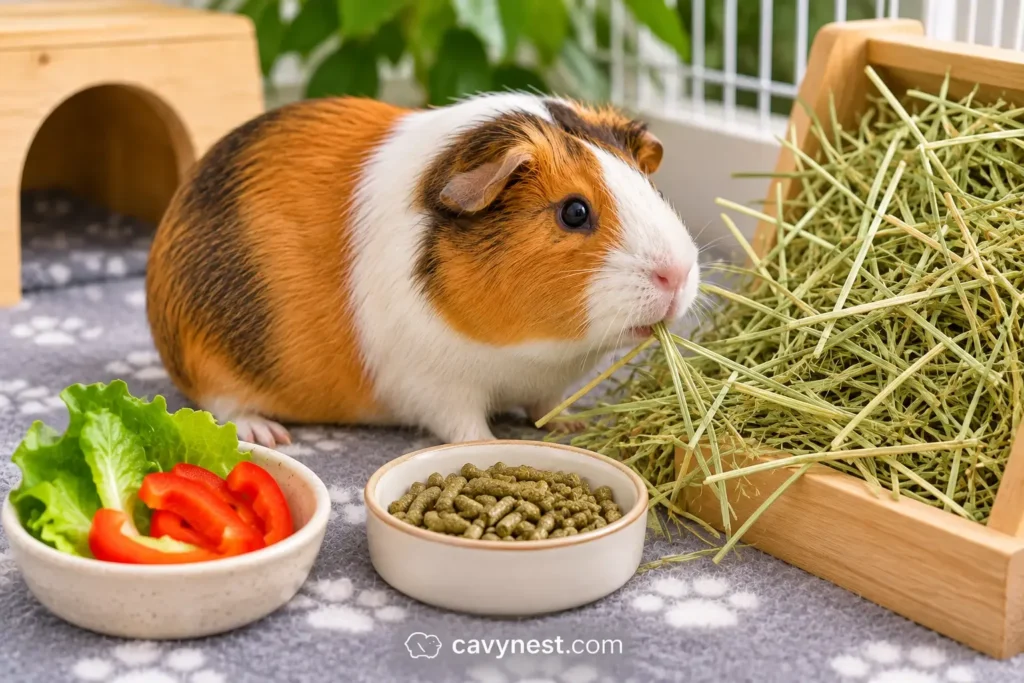
Merck Veterinary Manual — Diet for a Guinea Pig.
Movement and housing without forcing exercise
A spacious flat enclosure encourages walking, exploration and normal social activity. Scatter hay in more than one clean area, place hides with two exits and offer safe floor time in a supervised, guinea-pig-proof space. Companionship with compatible guinea pigs also supports normal species behavior.
Build activity into feeding without making a hungry animal work to obtain its essential hay. Start with short easy routes, especially if mobility is reduced. Avoid exercise balls, wheels, steep ramps and forced running: they do not replicate how guinea pigs move and may cause injury or stress.
Make it easy to reach food and water without climbing. A heavy animal with sore feet or joints may need treatment rather than encouragement to run.
Changing the enclosure layout gradually can help a timid guinea pig explore confidently. Watch whether the animal uses the new areas without obvious distress.
When a round belly is a medical warning
A suddenly enlarged, tense or painful abdomen is not the same as gradual fat gain. Loss of appetite, fewer droppings, lethargy, tooth grinding, labored breathing or inability to move normally requires prompt veterinary advice. Not eating or producing very few droppings is urgent.
A lump, fluid accumulation, pregnancy or digestive problem may change shape without indicating obesity. Do not try to identify the cause by squeezing the belly. Ask a veterinarian familiar with guinea pigs to examine the animal promptly when changes are abrupt or accompanied by illness.
Gastrointestinal problems can worsen quickly in guinea pigs. Less food intake and fewer droppings are urgent warning signs even if the animal is still moving around.
Difficulty breathing is an emergency. If the pet is distressed, minimize handling and contact a veterinary service immediately.
A sensible monitoring plan
Begin with a veterinary baseline: body condition, dental and musculoskeletal health, diet review and an individualized goal. At home, weigh on the same day each week; keep notes about hay consumption, vegetables, pellets, treats, droppings and activity.
Make changes gradually and review the trend rather than attempting a preset number of grams lost per week. If appetite drops, stools change or the animal appears uncomfortable, stop the home plan and obtain veterinary advice. Maintain vitamin C intake while adjusting excess calories.
Bring the food list and weight log to appointments. They help the vet separate overfeeding from changes associated with pain, dental disease or other conditions.
Continue routine health checks alongside the diet review: examine feet, grooming ability and the cleanliness of the rear end.
Common mistakes to avoid
Do not judge obesity by the weight of another guinea pig, a dramatic social-media photograph or the size of the dewlap alone. Avoid confusing a growing youngster with an adult, and never apply human calorie restriction or a weight-loss supplement to a guinea pig.
Avoid switching feeds overnight, using rabbit pellets, removing roughage or assuming inactivity is laziness. Painful feet, dental disease and arthritis can reduce movement. Address the underlying problem before making exercise more demanding.
Do not assume hay is optional because pellets contain fiber. Long-stem hay encourages normal chewing and supports gut health.
Never follow generic rodent weight-loss advice without confirming it is suitable for guinea pigs, whose dietary vitamin C needs are distinctive.
NC State Veterinary Hospital — Caring for Your Pet Guinea Pig.
Final verdict: condition first, numbers second
A fat-looking guinea pig is not necessarily obese, and a heavy guinea pig is not automatically unhealthy. Body-condition palpation, a documented trend and veterinary examination are more useful than a universal target weight.
Protect the essentials—unrestricted hay, vitamin C, clean water, appropriate companions and comfortable movement—while correcting excess treats or pellets gradually. The best outcome is steady health and normal behavior, not the smallest number on the scale.
Progress means a comfortable, active animal maintaining normal appetite and droppings. Gradual feeding changes are preferable to chasing dramatic before-and-after photos.
Review the plan if the scale and body assessment disagree, especially during growth, pregnancy or illness.
Further veterinary reading
- NSW Department of Primary Industries — Guinea Pigs Rehoming Guideline
- PDSA — Your guinea pig’s diet
- Merck Veterinary Manual — Diet for a Guinea Pig
- NC State Veterinary Hospital — Caring for Your Pet Guinea Pig
- PDSA — Guinea pig health
- RSPCA — How to take care of your guinea pigs
Frequently asked questions
How do I know if my guinea pig is overweight?
Check whether the ribs, spine and pelvis are hard to feel under a thick tissue covering and whether the waist has diminished. Confirm with an experienced veterinarian, because coat and frame size can mislead.
What weight is too heavy for a guinea pig?
There is no single weight cutoff suitable for every guinea pig. Breed, sex, age, musculature and body-condition score matter more than any isolated number.
Should I stop feeding pellets to a fat guinea pig?
Do not stop pellets abruptly without veterinary guidance. Review their formulation and measured portion while continuing unlimited grass hay and suitable vitamin-C-rich vegetables.
Can I put my guinea pig on a diet?
Yes, if a veterinarian confirms excess body fat and recommends an individualized gradual feeding plan. Never fast a guinea pig or restrict hay.
How often should I weigh my guinea pig?
Weekly weighing with the same gram scale is a practical routine for a healthy adult. Sudden change or illness requires veterinary advice and possibly more frequent checks.
Is a round belly always a sign of obesity?
No. Natural body shape, pregnancy, gas, fluid and other illnesses can change the abdomen. A sudden, tense or painful enlargement requires prompt veterinary care.
How can an overweight guinea pig exercise?
Offer safe floor-level space, multiple hay stations, gentle exploration and reachable hides. Never force running or use exercise wheels or balls.
Can too many treats make guinea pigs overweight?
Yes. Frequent sugary or calorie-dense treats can displace hay and contribute excess energy. Limit treats while preserving a high-fiber balanced diet.
When is a guinea pig’s weight change an emergency?
Seek urgent veterinary care when weight change accompanies reduced eating, fewer droppings, a swollen painful abdomen, marked weakness or breathing difficulty.